
Discover what makes an AI development agency in Singapore stand out in the growing AI market.


At PixlerLab, we’ve seen firsthand how skipping steps in the AI Development process can lead to lackluster outcomes. It’s not just a checklist; it’s a roadmap that prevents common pitfalls like scope creep and technical debt. Trust me, we’ve learned this the hard way.
But let’s be real-developing AI is more than just writing code. It’s a complex dance involving teams from different disciplines. Without a clear plan and constant communication, even the best ideas can fall apart. Take it from us: we once had a project where early miscommunication led to a major mismatch in expectations. Two sprints in, we had to backtrack. Lesson learned: keep talking.
AI development is about creating systems that can handle tasks usually requiring human smarts, like understanding language or spotting patterns. It’s a big deal because AI can shake up industries from healthcare to finance. But it’s not a walk in the park. Planning, data management, and model training are just the beginning. Ever wonder why projects often blow their budgets or miss deadlines? It’s usually because folks underestimated AI’s complexities.
We often hear clients say, “Just add some AI.” If only it were that simple! Implementing AI is about crafting a solution that fits your specific problem, not just plugging in a tool. And let’s not forget about ethics, bias, and interpretability-they’re becoming crucial as AI systems get more complex.
Following a structured process in AI development isn’t just about ticking boxes. It’s about reducing risks and boosting the quality of the end product. At PixlerLab, we swear by it. This approach keeps errors in check and makes sure everyone knows what’s expected. Plus, it helps manage the AI project’s lifecycle, so what you build today can grow with you tomorrow.
One time, a client pushed us to skip straight to deployment. The result? A model that flopped in the real world. We had to redo everything from scratch. If only we stuck to our process from the get-go!
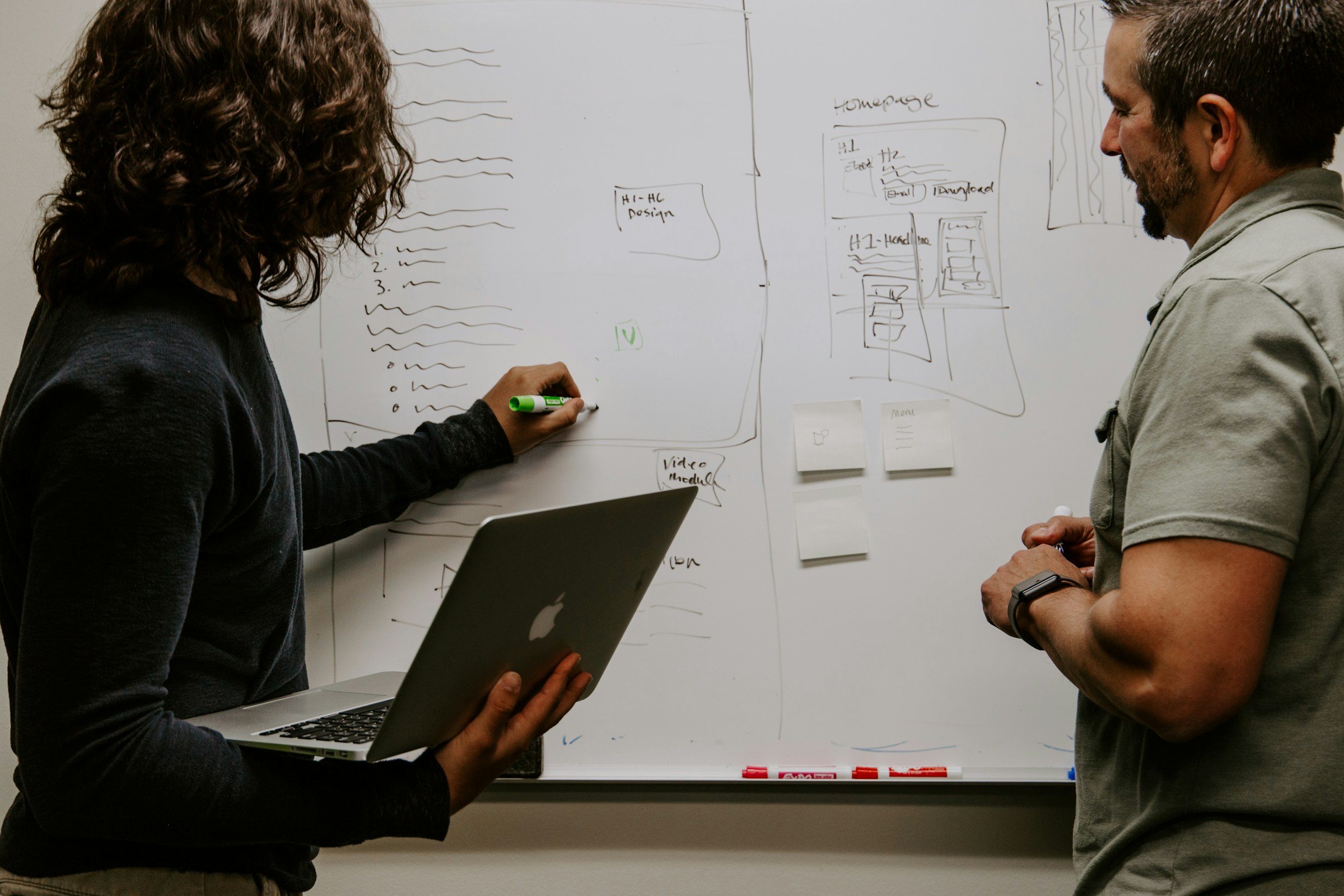
Ideation and planning lay the groundwork for your AI project. It’s not just about dreaming big but being practical. You need to pinpoint the problem and align it with business goals. Feasibility studies help you see if the idea is technically and economically viable. Without this solid start, everything else could crumble.
Feasibility analysis is crucial. Check technical requirements against your current capabilities. Do you have the right data? Is the technology up to snuff? And don’t forget economic viability. Budget constraints can derail projects, so align your goals with resources. At PixlerLab, we use a checklist for this phase.
Better to spot roadblocks early than halfway through. We’ve seen companies invest heavily only to pivot or abandon projects when feasibility issues crop up late. Balancing ambition with realism is key.
Data is the lifeblood of AI. Collecting and prepping data is the most labor-intensive stage, but it’s crucial for accuracy. Without high-quality data, even the best algorithms won’t perform well. In this phase, patience is your best friend.
Effective data collection relies on diverse methods:
Each method has its perks and challenges. Surveys might be biased, web scraping has legal hurdles, and APIs depend on third-party stability.
import pandas as pd

# Load the dataset
data = pd.read_csv('data.csv')

# Handling missing values
data.fillna(method='ffill', inplace=True) # Forward fill, a simple but often effective method

# Encoding categorical variables
data = pd.get_dummies(data, columns=['category'])

# Normalize numerical features
for column in ['feature1', 'feature2']:
 data[column] = (data[column] - data[column].mean()) / data[column].std()

print(data.head())
Preprocessing is where many projects stumble. Make sure your data is clean and consistent. It’s not glamorous, but it’s essential. Think of it as laying a smooth road for your AI. Without it, you’re in for a bumpy ride.
We’ve seen projects falter when data preprocessing was overlooked. A customer data project hit snags with non-standardized input formats, which misled the model. Data quality is non-negotiable.
The model development phase is where your AI system starts to take shape. It’s about picking the right model, training it, and iterating for improvement. Choosing the right model can be daunting, but each decision here is crucial for the final product’s efficiency.
When choosing a model, consider:
For example, in predictive maintenance, simpler models might suffice if they provide quick insights. For image recognition, more complex models like convolutional neural networks might be necessary.
Training involves teaching your model to recognize patterns. It’s an iterative process, not a one-time task.
from sklearn.model_selection import train_test_split
from sklearn.ensemble import RandomForestClassifier

# Split data into training and test sets
X_train, X_test, y_train, y_test = train_test_split(X, y, test_size=0.2, random_state=42)

# Initialize and train the model
model = RandomForestClassifier(n_estimators=100, random_state=42)
model.fit(X_train, y_train)

# Validate the model
accuracy = model.score(X_test, y_test)
print(f'Model Accuracy: {accuracy:.2f}')
Training isn’t a one-and-done task. Each iteration can reveal new insights, sometimes leading to adjustments in the model or data preparation. We once spent weeks refining a sentiment analysis model, tweaking parameters and testing different algorithms until we got it right.
Overfitting is a big risk during training. Regularization techniques or cross-validation are practical methods to avoid it.
Testing and evaluation measure how well your AI model performs. It’s an ongoing process that ensures reliability over time.
Key metrics include:
Choosing the right metrics is crucial. In fraud detection, false negatives can be more critical than false positives, so we might prioritize recall.
Use a mix of unit tests, integration tests, and end-to-end tests. At PixlerLab, comprehensive testing prevents surprises. Once, integration tests caught an anomaly missed in unit tests-saving us from a potential production issue.
“Testing is not just a phase — it’s an integral part of the development process that helps ensure reliability and performance.”
Ever tried explaining to a client why their shiny new AI model isn’t working as expected? It’s not fun. Proper testing and evaluation can spare you those awkward conversations.

Deployment is more than just pushing code to production. It’s about ensuring the AI system works as intended in the real world. This stage tests not just the technology but the entire development process.
Deployment involves numerous moving parts. It’s not just about getting your code to work; it’s about ensuring it continues to work as expected.
After deployment, continuous monitoring is vital. Regularly check performance and accuracy. Implement feedback loops to incorporate real-world data, allowing the system to adapt over time. At PixlerLab, ongoing maintenance is key to sustaining AI success. We hold regular review cycles with clients to ensure adaptations align with evolving needs.
Consider this-an AI model trained on data from six months ago might not be effective today, given changing market conditions or consumer behaviors. Updates are not just recommended; they are necessary.
Let’s explore a real-world example of AI deployment. This case study highlights the journey of a retail company integrating AI to enhance customer experience. It showcases how a well-executed AI project can deliver tangible business value and set a precedent for future initiatives.
The company aimed to personalize customer interactions by predicting shopping behaviors. Their objective was clear: increase customer retention and sales by 20% over the next year. They identified key touchpoints in the customer journey and sought to optimize these through targeted marketing and personalized recommendations.
Challenges included data silos and varying data quality across sources. They chose a hybrid model approach, combining collaborative filtering and content-based methods. By iterating on their model based on real-time feedback, they exceeded their sales target, achieving a 25% increase. The project’s success was attributed to the regular refinement of models and close alignment with business objectives.
This case underscores the need for flexibility and ongoing adaptation. Initial plans rarely work perfectly end-to-end, but with a responsive strategy, AI can drive significant business outcomes.
The AI development process is a journey from concept to deployment, requiring meticulous planning and execution. As AI technology evolves, trends like explainable AI and AI-driven automation are gaining traction, opening new growth avenues. It’s an exciting time to be involved in AI, as the technology is constantly pushing boundaries.
We expect further innovations in AI ethics, transparency, and governance. As AI systems take on more significant roles in decision-making, these areas will become increasingly important. There’s growing recognition of the need for AI that not only performs well but also operates ethically and transparently.
Areas ripe for advancement include AI in healthcare diagnostics, autonomous vehicles, and smart city infrastructures. At PixlerLab, we’re excited about the endless possibilities AI presents and remain committed to driving innovation in this rapidly changing field.
If you’re interested in exploring how AI can benefit your business, consider PixlerLab’s AI solutions to simplify your development process. We’re here to help navigate the complexities and make AI work for you.
Claude Development
Jul 23, 2026
Discover what makes an AI development agency in Singapore stand out in the growing AI market.

Claude Development
Jul 1, 2026
Explore leading generative AI development agencies in the USA, their services, and success stories.

Claude Development
Jun 29, 2026
Model Context Protocol : what it replaces, how it speeds AI MVPs, & production-ready integrations today.