
Explore leading generative AI development agencies in the USA, their services, and success stories.


When it comes to ai development agency Singapore, getting the fundamentals right matters. Singapore’s rapidly transforming into a tech powerhouse, especially in the AI arena. It’s pretty much at the heart of global AI innovation. But your choice of an AI Development Agency can make all the difference. At PixlerLab, we’ve witnessed the highs and lows of this journey many times. Honestly, picking the right partner isn’t just strategic; it’s essential for crafting AI solutions that match your specific needs.
Table of Contents
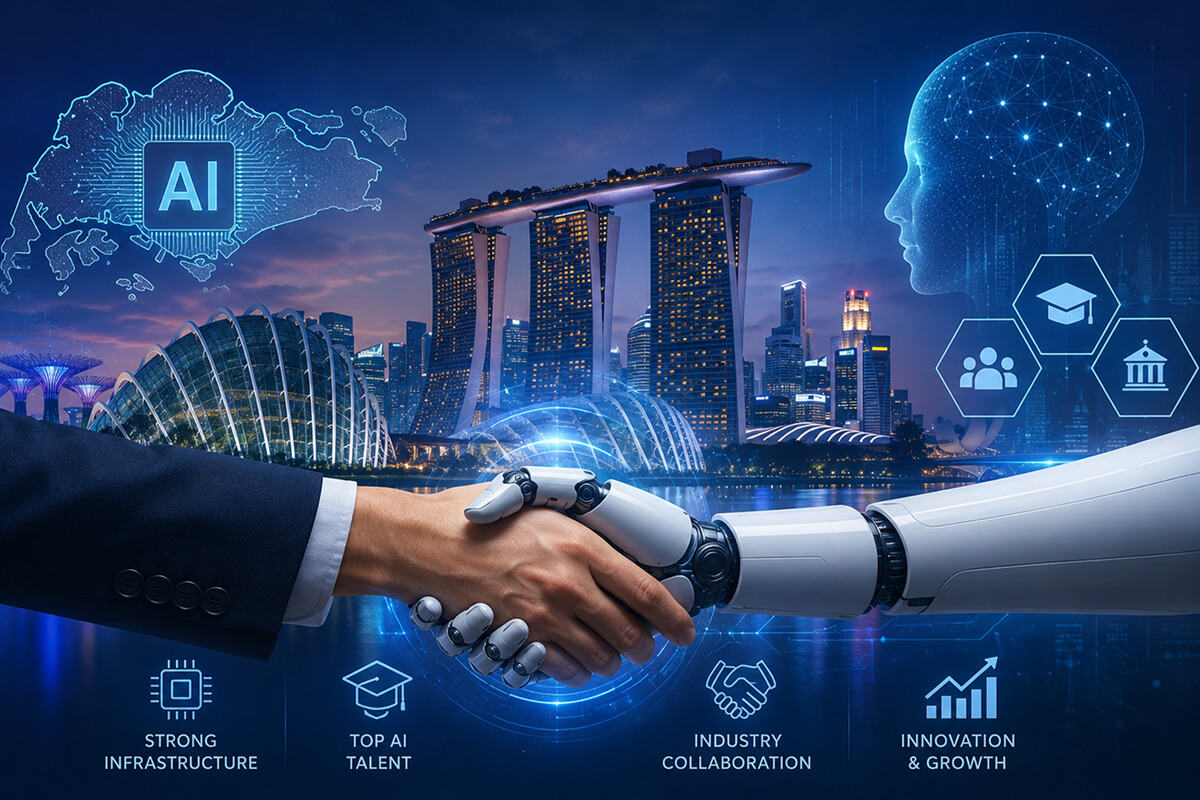
Singapore isn’t just leading in tech; it’s on the modern front of AI investment. Programs like AI Singapore are pushing boundaries and fostering AI solutions across various sectors. We’ve seen at PixlerLab how businesses using Singapore’s AI resources often move projects faster. There’s access to incredible talent, supportive policies, and top-tier infrastructure-a perfect storm for AI Development. And the government’s Smart Nation initiative underscores Singapore’s commitment to integrating technology deeply into society, creating more opportunities for AI applications.
So, why’s Singapore such a magnet for AI innovation? Strategic investments in infrastructure and education, honestly. The universities are cranking out excellent AI researchers, and the government strongly pushes for industry and academia collaborations. For businesses, this means quicker rollouts and less risk, thanks to a solid local ecosystem. Still, the road isn’t always smooth. Companies often face hurdles when adopting AI technologies. A major one? Choosing the right AI Development Agency. The wrong choice can seriously set back your project. Many dive into AI headfirst but soon find themselves overwhelmed by unexpected complexities. Make sense?
“In a fast-paced environment like Singapore, aligning with a skilled AI development partner can be the difference between leading the market or lagging behind.”
We’ve seen companies falter by not properly vetting their AI partners. It’s crucial to consider an agency’s track record, domain expertise, and their custom solution capabilities. Here’s a hot take: Going for cheap options? They often lead to disappointment. Businesses may find their partner can’t scale the solution or, worse, can’t deliver on promises at all. Chasing short-term savings can backfire, leading to missed opportunities and hefty delays.
Consider this: a company swayed by a low bid might end up facing hidden costs due to poor setups or reworks. Those initial “savings” could quickly evaporate amid strategic missteps. So, while cost matters, it can’t be your sole deciding factor for an AI partner. We’ve also seen issues like data mismanagement and lack of clarity in AI goals derail projects. These missteps often stem from jumping into AI without a clear understanding of the necessary groundwork and ongoing management it requires.
Another common pitfall is inadequate change management. AI introduction often demands changes in workflows and processes, and overlooking the human element can lead to resistance and poor adoption. This is where a skilled AI development agency can play a critical role, guiding smooth transitions and fostering buy-in from all stakeholders.
AI systems are complex beasts, needing precise architecture to ensure performance and scalability. This whole setup involves data collection, machine learning models, and AI software crafting. Picture it all like a finely-tuned orchestra; each section needs to harmonize perfectly, or the music falls flat. Good system design directly impacts AI success. It dictates data flow, model operation, and the system’s scalability. A poor design leads to bottlenecks, lag, and security holes. Look at AI-driven chatbots; if designed wrong, they’ll crawl during busy times, frustrating users and breaking trust.
Consider these design pillars:
Overlook these, and you could be compromising on both performance and security. Basically, approach design holistically, aligning with both present needs and future aspirations. At PixlerLab, we often use a layered approach in designing AI architectures, focusing on modularity to ensure each component can evolve independently without affecting the whole system.

Implementing AI isn’t as simple as flipping a switch. It follows a series of precise steps. At PixlerLab, we’ve refined this into a smooth flow, hoping to minimize disruptions while maximizing results. Remember, integration isn’t solely about the tech. People and processes need alignment, too. Training and transparent communication smooth the integration pathway.
Integration isn’t just a technical challenge; it’s an organizational one. The best implementations consider the human side, too-user training, skills development, and change management are vital components of successful integration.
To illustrate AI implementation, here’s a simple Python snippet for a machine learning task. This example uses the tried-and-true scikit-learn library-perfect for quickly prototyping ideas before ramping up complexity.
from sklearn.model_selection import train_test_split
from sklearn.ensemble import RandomForestClassifier
from sklearn.datasets import load_iris

# Load dataset
data = load_iris()
X, y = data.data, data.target

# Split data
X_train, X_test, y_train, y_test = train_test_split(X, y, test_size=0.3, random_state=42)

# Initialize and train model
model = RandomForestClassifier(n_estimators=100, random_state=42)
model.fit(X_train, y_train)

# Evaluate model
accuracy = model.score(X_test, y_test)
print(f'Model accuracy: {accuracy:.2f}')
This snippet trains a Random Forest model on the Iris dataset, evaluates its accuracy, and can be tailored with different datasets. Well, actually that’s not quite right-what we mean is you can swap the Iris data for something like customer feedback to shape the model to specific needs. In a nutshell, Python’s scikit-learn remains a favorite for rapid prototyping. And if you’re just starting out, this code is a solid foundation to build and experiment with more sophisticated models over time.
The tech stack you choose is important. It dictates everything from development pace to system efficiency. Technologies like TensorFlow, PyTorch, and Keras are key players for machine learning. Frameworks like Flask and Django? They’re great for bringing AI solutions to life. Picking the right mix can simplify development and boost AI efficacy. When picking a tech stack, weigh the project’s scale, team know-how, and integration needs. Python often tops the list thanks to its vast libraries and community support. Meanwhile, Kubernetes offers solid scalability for production-ready AI. Your tech stack shouldn’t only meet current needs but also align with future growth ambitions.
Let’s break it down:
Getting the right combo can smooth out development processes and improve outcomes. Align the tech stack with your project’s demands for scaling and performance. At PixlerLab, we often evaluate the tech landscape regularly to stay ahead of new developments and ensure our stacks are leveraging the latest advancements.
For AI systems, performance metrics like latency, accuracy, and throughput are the guiding stars. They ensure that technology meets business needs. At PixlerLab, these metrics keep our AI systems at peak performance, even in changing conditions. To gauge success, focus on latency (response times), accuracy (correctness of predictions), and throughput (data processing prowess). Real-world tweaks, like boosting a recommendation system’s accuracy by 10%, can significantly enhance user engagement and revenue. But here’s the curveball: balance the trade-offs among these metrics.
Consistently review these metrics and apply AI software lifecycle optimization techniques to maintain top-tier performance. For instance, model pruning or quantization can slim down model size while increasing speed without greatly impacting accuracy. These tweaks can be crucial for deploying AI on resource-limited devices. We at PixlerLab frequently revisit performance standards to ensure our systems are finely tuned and responsive to the demands of our clients.
No matter how meticulously you plan, mistakes happen. Often, they’re not even technical. Strategic or organizational missteps are more common. You need to keep an eye on those.
Avoid common errors by crafting a comprehensive data strategy. Make sure your data is clean and mirrors real-world scenarios. A solid data game includes understanding data sources, cleaning processes, and ensuring relevance to the problem. Mishandling data can result in biased models that flop in real life.
Overlooking scalability? It can bite you later as demand ramps up. Security’s another facet that’s often overlooked until crunch time. Regular audits and best practice implementation can stave off risks. Remember, security isn’t just about warding off threats; it ensures data integrity and model dependability, too. We ran into this with a client project: a lack of proper version control led to deploying old models by accident. Implementing a solid model management process early on can help dodge such hiccups.
Also, failing to align AI initiatives with overall business goals can lead to inefficiencies. AI should drive business outcomes, not operate in a vacuum. Regular stakeholder engagement and clarity on objectives keep projects aligned with business needs. At PixlerLab, we emphasize a collaborative approach where technical teams, stakeholders, and end-users work together from the start to the finish line.
AI’s uses are vast, and Singapore hosts many successful stories. From finance to healthcare, industries are reaping the rewards of AI-driven makeovers. Each sector tailors AI for its unique challenges and opportunities.
Take the finance sector, where AI detects fraud and manages risk. Models scrutinize transactions for suspicious patterns, boosting security. Or the healthcare industry, using AI in diagnostics and patient care. Machine learning can even foretell disease outbreaks by crunching data from myriad sources, aiding professionals in timely responses.
At PixlerLab, we assisted a local retailer in personalizing customer experiences, boosting sales by 15% with AI-driven insights. By analyzing customer data, we adjusted marketing tactics and stock levels, aligning with consumer preferences, enhancing the retailer’s bottom line. These examples showcase AI’s transformative power across Singapore’s diverse sectors. Think about AI’s role in logistics, optimizing supply chains, predicting setbacks, enhancing route efficacy. Or in public sectors, where AI sharpens urban planning, traffic oversight, and safety through predictive analytics. The education sector is also seeing transformations with AI-enabled personalized learning experiences that adapt to individual student needs, maximizing educational outcomes.
An AI development agency in Singapore connects you to a bustling tech ecosystem, government backing, and modern innovation. These agencies understand local market trends and regulations. Singapore’s strategic location and infrastructure amplify its allure as an AI hub.
Evaluate an agency’s history, domain expertise, and their knack for crafting custom AI solutions. Review their past work and client feedback to gauge their ability to meet your needs. Look for a partnership rooted in aligned goals and shared understanding of project scope and challenges. Challenges often involve data quality, integration complexities, and ensuring ethical compliance. Collaborating with a seasoned agency can effectively navigate these challenges. Such agencies provide insights on best practices, helping mitigate risks associated with scaling AI solutions.
Common challenges include managing data quality, integrating AI into existing systems, maintaining AI accuracy over time, and addressing ethical concerns. Working with a knowledgeable AI partner can ease these challenges, providing expertise and strategic guidance.
Navigating AI development in Singapore hinges on picking the right agency. The ideal partner will provide machine learning insights, tackle implementation challenges, and ensure AI scalability. At PixlerLab, we’re convinced that aligning with the right partner is a strategic move for fostering business growth and innovation. Our hands-on experience within Singapore’s AI landscape has taught us how to blend technical know-how with strategic foresight.
Picking an AI development agency isn’t just about tech-it’s about forging a partnership. A great agency will work closely with you to unlock AI’s full potential, aiming for long-term success. So, why wait? Use AI for transformative outcomes. Effective collaboration can ignite innovations that boost efficiency, elevate customer satisfaction, and spawn new growth opportunities. Ready to dive into AI solutions for your business? Reach out to PixlerLab today for a consultation or demo. Our expert team is here to guide you through AI integration, offering proven success and impactful results. Let’s help you use AI to boost business outcomes, drawing from our deep expertise and local insights.
Our team at PixlerLab is ready to help you navigate the complexities of AI, ensuring your projects aren’t only successful but also impactful. Contact us to learn more about how we can support your AI initiatives and help bring your innovative ideas to life.
Claude Development
Jul 1, 2026
Explore leading generative AI development agencies in the USA, their services, and success stories.

Claude Development
Jun 29, 2026
Model Context Protocol : what it replaces, how it speeds AI MVPs, & production-ready integrations today.

Claude Development
Jun 26, 2026
Explore the factors influencing AI software development cost and get tips for effective budgeting.