
Discover remote AI agent developer jobs, essential skills, key responsibilities, and how to land a remote AI role.


When it comes to ai development agency in usa, getting the fundamentals right matters. Picture this: AI is no longer just a sci-fi dream but a daily business tool. That’s the current scene for many companies across the USA, largely due to the emergence of AI Development Agencies. They’re integrating AI into the fabric of business operations, transforming industries along the way. But choosing the right agency is crucial. It can mean the difference between a project that pushes boundaries and one that falls flat. We’ll dig into the services these U.S. agencies offer, how to identify the best fit, and the trends that are shaping the industry.
Table of Contents
AI’s adoption is nothing short of phenomenal, with more businesses recognizing its potential to optimize operations and drive innovation. For instance, AI’s role in automating manufacturing processes has drastically reduced errors and increased production efficiency. In the logistics sector, AI helps in route optimization, decreasing delivery times, and cutting costs. These examples highlight how AI development agencies in the USA are the backbone behind this transformation, offering specialized expertise to bring AI-driven solutions to life.
AI technology is sweeping through the USA, reshaping everything from healthcare to finance. At PixlerLab, we’ve seen AI evolve from basic automation to sophisticated systems that adapt and provide insights in real-time. These innovations aren’t just about speed; they’re about making intelligent decisions. Consider healthcare: AI is aiding doctors in early disease detection, improving patient outcomes by analyzing complex datasets that would overwhelm a human. In finance, AI plays an important role in detecting fraud in real-time and offering personalized banking experiences to customers. there’s a lot you can do, and the technology is only getting better.
So why is this significant? AI’s rise in the USA is driven by several factors, including advancements in machine learning algorithms, the availability of big data, and increased computational power. These elements combine to create systems that not only perform tasks but learn and improve over time, offering strategic advantages to businesses willing to adopt them.
But what’s truly exciting is the collaboration between AI development agencies and industries. This partnership is key to translating raw technological potential into practical applications. For example, an AI agency might work with a retailer to develop a personalized recommendation engine, enhancing customer experience and sales. In manufacturing, agencies help optimize supply chain logistics, reducing waste and costs. These collaborations are where theory meets practice, turning AI’s promise into reality.
Selecting an AI Development Agency in the USA isn’t about picking the one with the flashiest website. It’s about finding a partner who can deliver on their promises. With countless agencies claiming they’re the best, how do you make the right choice? It’s essential to explore deeper. Examine their previous work to see if their solutions were successful and innovative. A solid portfolio and a team proficient in modern AI technologies signal a capable agency.
Experience is a critical factor. An agency that understands your industry’s nuances can offer more tailored solutions. For instance, an agency with a history of working in healthcare will better understand regulatory compliance and data privacy concerns, which are crucial in that sector. Also, consider the agency’s ability to innovate. Are they on the modern of AI advancements, or do they stick to tried-and-true methods? While reliability is important, an agency that isn’t afraid to experiment can provide significant competitive advantages.
How do you determine if an agency is legitimate? It’s more than just their credentials or awards. Dive into their past projects: were they challenging yet successful? Do they’ve a portfolio of AI applications that meet specific needs? An adept team in machine learning, deep learning, and natural language processing is essential. At PixlerLab, we’ve built a reputation for delivering AI solutions that not only innovate but align with our clients’ strategic goals, consistently exceeding their expectations.
Communication also plays a crucial role. An agency that regularly updates clients, explains technical details clearly, and listens to client feedback can make all the difference in a project’s success. After all, AI development is a collaborative effort, and clear communication strengthens this partnership.
Developing AI systems isn’t just about selecting the right tools; it’s about designing an architecture that fits with the client’s goals and existing infrastructure. Agencies balance cloud-based solutions, on-premise setups, and hybrid models to integrate new AI capabilities with existing systems. Each choice has its own set of advantages and disadvantages. For instance, a cloud-based model offers scalability and flexibility but may pose concerns regarding data security and latency. Conversely, an on-premise setup provides more control over data but can be costly and less flexible. Hybrid models attempt to strike a balance by leveraging the strengths of both approaches, but they also introduce added complexity.
Microservices architecture is popular for its scalability and flexibility, breaking applications into smaller, independent services. This approach allows teams to develop and scale each part separately, providing flexibility in updating and deploying individual services without disrupting the entire system. Serverless architecture is another approach, optimizing resource usage and reducing infrastructure management overhead. With serverless, developers focus more on code and less on the operational logistics of running servers.
But choosing the right architecture is only the start. The real challenge is executing it smoothly without disrupting current operations. Every implementation should consider the end-user experience, ensuring that new AI capabilities enhance rather than hinder their workflow. This is a critical aspect that agencies must manage to ensure project success.
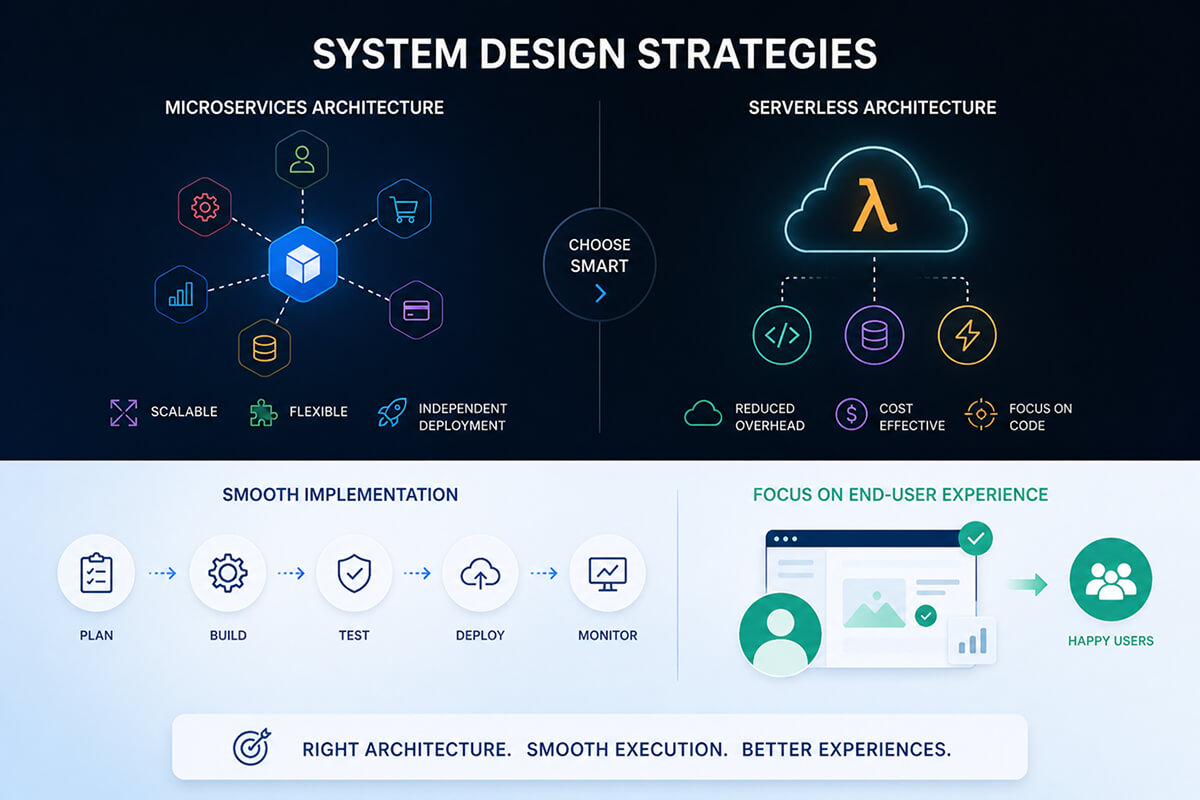
Implementing AI solutions involves a methodical approach to ensure that the project stays on track and meets its goals. Here’s a step-by-step plan that many agencies follow to achieve success:
At PixlerLab, we emphasize open communication and a structured plan to keep projects on track while being adaptable enough to address unforeseen challenges. Our approach ensures that all stakeholders are aligned, and the project remains focused on delivering tangible benefits.
Here’s a look at a basic machine learning model using Python and Scikit-learn, a go-to framework for many AI development agencies in the USA. This snippet walks you through the basic workflow from data preparation to model training and evaluation, showcasing how many agencies begin before moving to more complex strategies.
import numpy as np
from sklearn.model_selection import train_test_split
from sklearn.svm import SVC
from sklearn.metrics import accuracy_score

# Generating sample data
X = np.array([[1, 2], [2, 3], [3, 4], [4, 5], [5, 6]])
y = np.array([0, 1, 0, 1, 1])

# Splitting the data into training and test sets
X_train, X_test, y_train, y_test = train_test_split(X, y, test_size=0.4, random_state=42)

# Initializing the model with a linear kernel
model = SVC(kernel='linear')

# Training the model
model.fit(X_train, y_train)

# Making predictions
predictions = model.predict(X_test)

# Evaluating the model's accuracy
print("Model Accuracy:", accuracy_score(y_test, predictions))
Scikit-learn provides a comprehensive suite of tools for building and deploying machine learning models. This example illustrates the simplicity and power of the library, allowing developers to quickly prototype and experiment with different models. It’s a favorite among agencies for its robustness and ease of use, often serving as a stepping stone to more advanced frameworks like TensorFlow or PyTorch.
Choosing the right tech stack is crucial for AI development agencies looking to provide high-quality services. Leading agencies in the USA often rely on established frameworks like TensorFlow and PyTorch for their solid capabilities and strong community support.
TensorFlow is renowned for its ability to deploy AI applications across various platforms, from desktop to mobile. It offers an open-source ecosystem with extensive support for deep learning models, making it a versatile choice for a wide range of AI projects. PyTorch is praised for its dynamic computation graph, which simplifies debugging and accelerates model development. This flexibility makes it well-suited for research and production environments, offering developers the tools needed to push the boundaries of AI innovation.
Other valuable tools include Keras, a high-level neural networks API that simplifies model building, and Apache Spark for big data processing. Together, these tools form a potent tech stack that enable agencies to create modern AI solutions. Each tool is selected based on its specific strengths and the requirements of the project at hand.
Evaluating AI solutions based on performance is vital to ensuring they deliver the desired results. Metrics such as model accuracy, processing latency, and scalability are essential for assessing AI systems.
“Track metrics that matter: accuracy, latency, and scalability define AI project success.”
Model accuracy indicates how reliably a model predicts outcomes. High accuracy translates to better decision-making, critical in fields where precision matters, such as finance or healthcare. Latency measures system responsiveness, crucial for real-time data processing where delays can lead to poor user experiences. Scalability ensures the model can handle increased loads, a key factor for growing businesses that need their solutions to expand with demand.
At PixlerLab, we regularly track these metrics to keep our solutions at the forefront of AI development. By analyzing performance data, we refine our models to achieve best efficiency and effectiveness, delivering consistent value to our clients. These insights not only guide our development process but also inform clients of the tangible benefits our solutions provide.

Missteps in AI project collaboration often stem from miscommunication and unrealistic expectations, leading to costly delays and project derailments. Many developers encounter these issues when working with AI agencies, causing projects to veer off course.
To avoid these issues, establish clear communication from the start. Set realistic milestones and deliverables that reflect the technology’s capabilities. Encouraging transparency and regular feedback can prevent misunderstandings and ensure alignment with the project’s vision. From our experiences at PixlerLab, clear goals and a collaborative approach often deter potential pitfalls and enhance productivity.
Another common mistake is underestimating the importance of data quality. Poorly curated data leads to inaccurate models, rendering the AI solution ineffective. Agencies should work closely with clients to understand their data sources and ensure that the data used is relevant and of high quality. This collaboration can significantly impact the success of the AI implementation.
AI’s practical applications are as varied as they’re impactful. Here are some ways AI development agencies in the USA have used AI technology to drive innovation and efficiency across different industries.
AI has revolutionized predictive diagnostics and personalized treatment plans in healthcare. A prominent agency developed a system using patient data to predict disease onset, enabling earlier interventions and improving outcomes. This system integrates smoothly with existing healthcare frameworks, enhancing current practices. In finance, AI focuses on risk management and fraud detection.
One USA firm implemented a tool that analyzes transactional data in real-time to detect potential fraud. This system saves millions in potential losses and boosts customer trust. By leveraging machine learning algorithms, the tool continuously improves its detection capabilities, adapting to new fraud patterns and providing solid protection for financial institutions. Retail has seen AI transform customer personalization and inventory management.
By analyzing consumer behavior, AI tools offer personalized recommendations, boosting engagement and sales. AI also predicts stock needs, reducing overstock and improving supply chain efficiency. In each of these sectors, AI serves as a critical enabler, helping companies optimize operations and deliver superior customer experiences.
AI development agencies provide a range of services, including machine learning model development, AI consulting, data analysis, and custom AI solution design. They also help integrate AI capabilities into existing systems, ensuring smooth implementation that meets business goals.
Choosing the right AI agency involves evaluating their technical expertise, past project successes, and alignment with your goals. It’s essential to assess their ability to integrate AI solutions with your infrastructure and maintain open communication throughout the project lifecycle. The cost of hiring an AI agency varies widely based on the project’s scope and complexity. Agencies may charge hourly rates or project-based fees, ranging from tens of thousands to several million dollars. Understanding your specific project requirements is crucial for accurately estimating costs.
The timeline for implementing an AI solution depends on the project’s complexity and scope. Simple solutions might take a few months, while more complex projects can take a year or more. Establishing clear goals and working closely with the agency can help simplify the process. Yes, AI development agencies can assist with data privacy concerns. They often employ experts in data security and compliance to ensure that AI solutions meet industry standards and regulatory requirements, protecting sensitive information during the development and deployment process.
Choosing the right AI Development Agency in the USA is a crucial decision that impacts the success of your AI initiatives. By understanding an agency’s capabilities, your project needs, and potential pitfalls, businesses can effectively integrate AI technologies. At PixlerLab, we stress informed, strategic decisions and proactive engagement in AI projects to drive success.
The right agency partnership can significantly advance your business by aligning your goals with their AI expertise. This collaboration ensures smooth AI integration, enhancing efficiency and fostering innovation.
Ready to explore AI solutions tailored to your business needs? Contact PixlerLab for expert AI development services that drive impactful results. Our team combines industry knowledge with technical prowess to deliver innovative solutions. Ready to take your business to the next level? Reach out today to discuss how our AI services can transform your operations. Visit our website for more information or to schedule a consultation.
AI Agents
Jul 3, 2026
Discover remote AI agent developer jobs, essential skills, key responsibilities, and how to land a remote AI role.

AI Agents
Jun 10, 2026
Claude AI support playbook for Zendesk & Intercom with deflection, escalation, and CSAT benchmarks.

AI Agents
Jun 5, 2026
Learn how to develop AI agents using no-code tools, making AI accessible to non-coders.