
Discover what makes an AI development agency in Singapore stand out in the growing AI market.


When it comes to generative AI Development Agency in usa, getting the fundamentals right matters. The world of generative AI Development Agencies in the USA is bustling with potential, yet fraught with challenges. As companies strive to enhance operations with AI, selecting the right agency becomes paramount. At PixlerLab, we’ve seen the transformative power of AI done right-and the frustrations when it misses the mark. So why is choosing the right partner so critical? Let’s explore this complex landscape, shall we?
Table of Contents
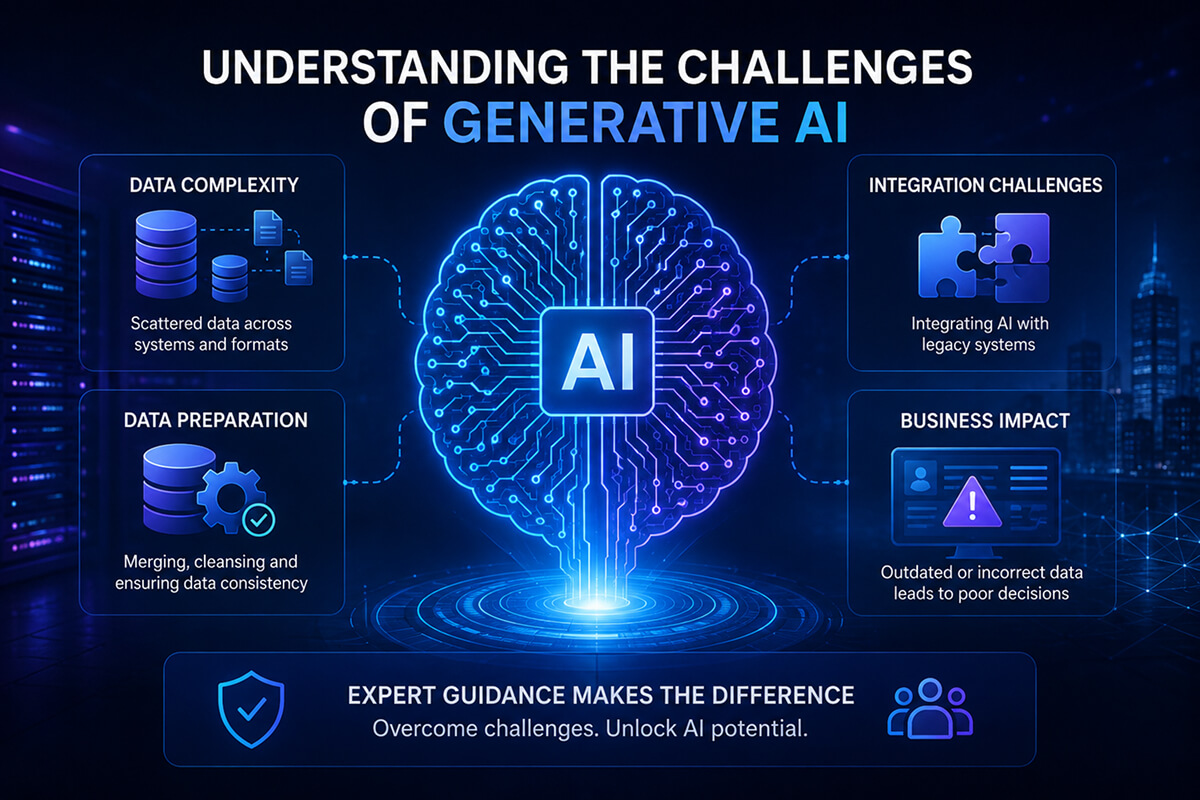
Engaging with generative AI isn’t a walk in the park. Many businesses dive in expecting quick wins, only to grapple with unforeseen technical hurdles. Massive datasets, intricate machine learning models-it’s a lot to manage. You know, like when a retail company aims to use AI for analyzing customer behavior, and their data is scattered across different systems and formats. The challenge lies in merging and cleansing this data to make it usable. We’ve been there.
Data isn’t just data-it’s the essence of AI models. Getting data sources in alignment and ensuring consistency is the initial hurdle. Think of a company with its customer data spread across transactional records, browsing histories, and feedback forms. Bringing this together into a cohesive dataset suitable for AI analysis requires meticulous preparation. Well, actually that’s not quite right-what we mean is, it demands serious attention to detail. We’ve learned this the hard way at PixlerLab-neglecting thorough prep leads to sluggish models or, worse, inaccurate results.
Then there’s the tricky part of integrating AI into existing systems. Many legacy systems weren’t built with AI in mind, complicating integration efforts. It’s not about just adding new tech; it’s about ensuring it works harmoniously with existing infrastructure. An experienced generative AI Development Agency is crucial here, guiding businesses through these integration challenges. But what exactly is at stake? Imagine if your AI isn’t synced with your customer relationship management (CRM) system-decisions could be based on outdated or incorrect information, leading to poor customer experiences.
There’s also the challenge of maintaining AI systems post-deployment. AI isn’t just a set-and-forget kind of technology. Models need constant monitoring and retraining to adapt to new data and changing conditions. Failing to do so could leave your AI making outdated or irrelevant predictions. It’s like having a brilliant assistant who only operates based on last year’s playbook-effective back then, but not so much now.
“Success in AI hinges not on the technology itself, but on the constant evolution and adaptation of that technology to real-world challenges.”
A successful AI implementation hinges on an effective architecture. So what does this entail in the real world? Modularity and scalability, my friends. But architecture isn’t a one-size-fits-all solution; it’s tailored to specific needs and capacities, allowing AI to be flexible and solid against unforeseen challenges.
Modularity allows tweaking of components independently, streamlining updates and maintenance. Think about a voice synthesis AI system-keeping text processing separate from voice generation allows easier updates and better control over each part. This separation is crucial not only for technical reasons but also for maintaining a clear and manageable development path. Meanwhile, scalability lets your AI grow alongside your operations. Cloud solutions like AWS or Google Cloud can make handling a surge from a thousand to a million users feel almost smooth.
Efficient workflows are about cutting the unnecessary and optimizing resource use. Neural networks and deep learning can eliminate bottlenecks, ensuring everything runs smoothly. Imagine automating tasks like data validation, freeing your team to focus on strategic initiatives. When neural networks handle initial data sorting, human analysts can concentrate on interpreting results and strategizing the next steps. That’s when productivity reaches new heights.
But let’s not forget the importance of human oversight. Automated workflows are fantastic, but they should always be complemented by expert review. Anomalies or nuanced insights can often be missed if everything is left to AI alone.
“A well-optimized AI workflow is like a well-oiled machine; every part works in harmony, ensuring the entire system operates smoothly.”

Ready to start your generative AI project? Here’s a simple guide to get your AI model up and running:
import tensorflow as tf
from tensorflow.keras.models import Sequential
from tensorflow.keras.layers import Dense, Dropout, LSTM

# Define the model
model = Sequential([
 LSTM(128, input_shape=(timesteps, features)),
 Dropout(0.2),
 Dense(output_dim, activation='softmax')
])

# Compile the model
model.compile(optimizer='adam', loss='categorical_crossentropy', metrics=['accuracy'])

# Summary of the model
model.summary()
This code sets up a basic generative AI model using TensorFlow and Keras. An LSTM layer processes sequential data, like text, while Dropout prevents overfitting. This approach helps the model generalize data more effectively. If you’re integrating your AI into a larger system, consider using RESTful APIs or message queues, like RabbitMQ, for module communication. This ensures your model is adaptable and can interact smoothly with other components.
Also, the choice of optimizer and loss function plays a vital role in determining how your model learns and its convergence speed. Understanding these nuances can make a significant difference in your model’s performance.
Choosing the right tech stack is crucial for AI project success, not just picking tools but ensuring they work harmoniously together. Sound familiar? It’s about building a symphony, not a ragtag band of disparate elements.
TensorFlow and PyTorch stand out, each offering unique strengths. TensorFlow’s extensive libraries make it ideal for deep learning, while PyTorch is loved for its simplicity and flexibility. Its popularity among researchers underscores its solid feature set. Meanwhile, frameworks like Apache Kafka for data streaming, Docker for environments, and Kubernetes for container orchestration are essential.
But how do you choose between them? TensorFlow’s support for production-grade deployment is unparalleled, while PyTorch excels in research environments. Understanding the specific demands of your project can guide this decision.
Supporting tools that simplify AI development include Git for version control, and CI/CD tools like Jenkins to automate testing and deployment. These tools create a safety net, allowing teams to focus on building without worrying over every code push. But remember, the choice of these tools should also consider team expertise and project requirements.
For data management, tools like Airflow help manage complex + data pipelines efficiently. Visualization tools such as Plotly or Matplotlib can be used for interpreting results, crucial for debugging and iterating on models. Each tool should complement the others, not just individually shine.
Performance metrics like latency and throughput determine your model’s real-world success. But why do these matter so much? Because they directly impact user satisfaction and operational efficiency.
Low latency ensures fast responses, while high throughput indicates system capacity. Tools like Prometheus and Grafana monitor these metrics, enabling timely optimizations. Think of latency as the time a user waits for a response, and throughput as the number of requests handled per minute. Balancing these metrics is essential for a smooth user experience.
Let’s not forget about the costs associated with cloud resources. High throughput might mean higher costs if not optimized correctly. Sometimes, it’s a balancing act between speed and expense.
Pruning, quantization, and optimized algorithms can significantly enhance performance. Pruning trims unnecessary neural network parts, and quantization speeds up processes by using integers. However, care must be taken not to compromise accuracy. At PixlerLab, we’ve seen blunders where data preprocessing was underestimated. Clean data is essential for effective AI models, akin to building on solid ground.
Consider implementing A/B testing to validate optimizations or new features. This allows empirical comparison of changes and ensures decisions are data-driven. Performance isn’t just about the backend-front-end optimization and user interface design can also influence perceived performance.
Skimping on testing is a common mistake. AI models require rigorous testing to ensure reliability. Cover edge cases to check performance. Overfitting, where a model excels on training data but fails on new data, is another trap. Regularization and a solid validation set can help avoid this, maintaining a separate validation set to test the model’s performance during training can be instrumental in catching overfitting early.
It’s crucial to focus on data preparation and testing, using CI/CD pipelines to automate the process. Avoiding overfitting ensures the model performs well on new data, not just the training set. But don’t just take our word for it-consider the lessons learned from other industries. A healthcare AI might perform flawlessly in controlled tests yet flounder when faced with real-world noise and variability.
Another pitfall is overengineering solutions. Sometimes, simpler models outperform complex ones due to better generalization. Always evaluate if complexity adds real value or merely increases maintenance burdens.
Generative AI is transforming industries, showcasing its versatility. Its impact is broad, reaching into various sectors that benefit from its unique capabilities.
In healthcare, AI enhances diagnostic accuracy and personalizes medicine. AI identifies patterns in medical images that might elude human eyes, leading to earlier diagnoses. AI-driven tools also offer personalized medicine by analyzing genetic information to tailor treatments, improving patient outcomes significantly.
Consider the use of AI in predicting disease outbreaks by analyzing social media trends and healthcare data. Early warnings can save countless lives, demonstrating AI’s potential beyond individual patient care.
Generative AI is reshaping art and music production. AI-generated compositions and artwork offer new creative avenues for artists. Platforms like OpenAI’s DALL-E transform text into images, opening new possibilities for advertising and content creation. In gaming, AI crafts dynamic levels, enhancing player experiences. Generative AI involves algorithms that create new content like text, images, or music by learning from existing data. It focuses on creation rather than mere analysis, imitating creativity to produce fresh outputs.
AI-written scripts or novels might sound like science fiction, but they’re increasingly becoming reality. These innovations challenge traditional notions of creativity and authorship, sparking debates about the future of digital art and copyright law.
Generative AI refers to algorithms that can create new content, such as text, images, or music, based on training data. Unlike traditional AI, it’s focused on creation rather than analysis. Choosing a development agency involves evaluating their expertise, experience, and understanding of your needs. Look for a solid track record, client testimonials, and a collaborative approach aligning with your culture and goals.
AI drives efficiency, automates repetitive tasks, and analyzes large datasets for insights. These benefits lead to cost savings, improved decision-making, and enhanced customer experiences with personalized services.
Selecting the right generative AI development agency in the USA is crucial for successful AI integration. Understanding the challenges, architecture, and best practices helps businesses make informed decisions. At PixlerLab, we believe the right partnership can turn your AI vision into reality. It’s about creating value and driving innovation.
Ready to explore how AI can revolutionize your business? Contact PixlerLab today to discover how our expertise and tailored AI solutions can drive your business forward. Let’s innovate together!
Claude Development
Jul 23, 2026
Discover what makes an AI development agency in Singapore stand out in the growing AI market.

Claude Development
Jun 29, 2026
Model Context Protocol : what it replaces, how it speeds AI MVPs, & production-ready integrations today.

Claude Development
Jun 26, 2026
Explore the factors influencing AI software development cost and get tips for effective budgeting.