
Per-seat pricing breaks when AI agents replace users. Choose an AI SaaS pricing model built for real margins.


Imagine a world where software development isn’t bogged down by tedious manual coding and endless testing. That’s exactly what’s happening with the rise of AI in the industry. AI isn’t just a new tool in the developer’s kit; it’s reshaping the entire process of building software, making it faster, smarter, and more adaptable. This shift is more than just technological-it’s changing the way we think about creating software.
AI-Driven Software Development is revolutionizing our approach to building software. It’s not just about efficiency; it’s about innovation. By automating repetitive tasks, reducing errors, and offering insights that might escape human notice, AI is invaluable, especially in complex projects where predicting user behavior and optimizing performance are key. Picture a digital marketing platform that uses AI to analyze trends and suggest campaign tweaks on the fly-that’s AI at work.
So, what does AI-driven development really mean? It’s about weaving AI technologies into every stage of the software development lifecycle. This could mean using machine learning to optimize code performance or employing natural language processing to improve code documentation and communication. It’s all about using AI tools smartly to enhance the development process.
At PixlerLab, we’ve jumped on this bandwagon. By integrating AI tools into our workflow, we simplify processes and produce high-quality software more efficiently. It’s not just about speed; it’s about unleashing creativity and precision in development. Imagine a developer freed from mundane tasks like writing repetitive code, now focusing on designing innovative features. That’s a real big improvement.
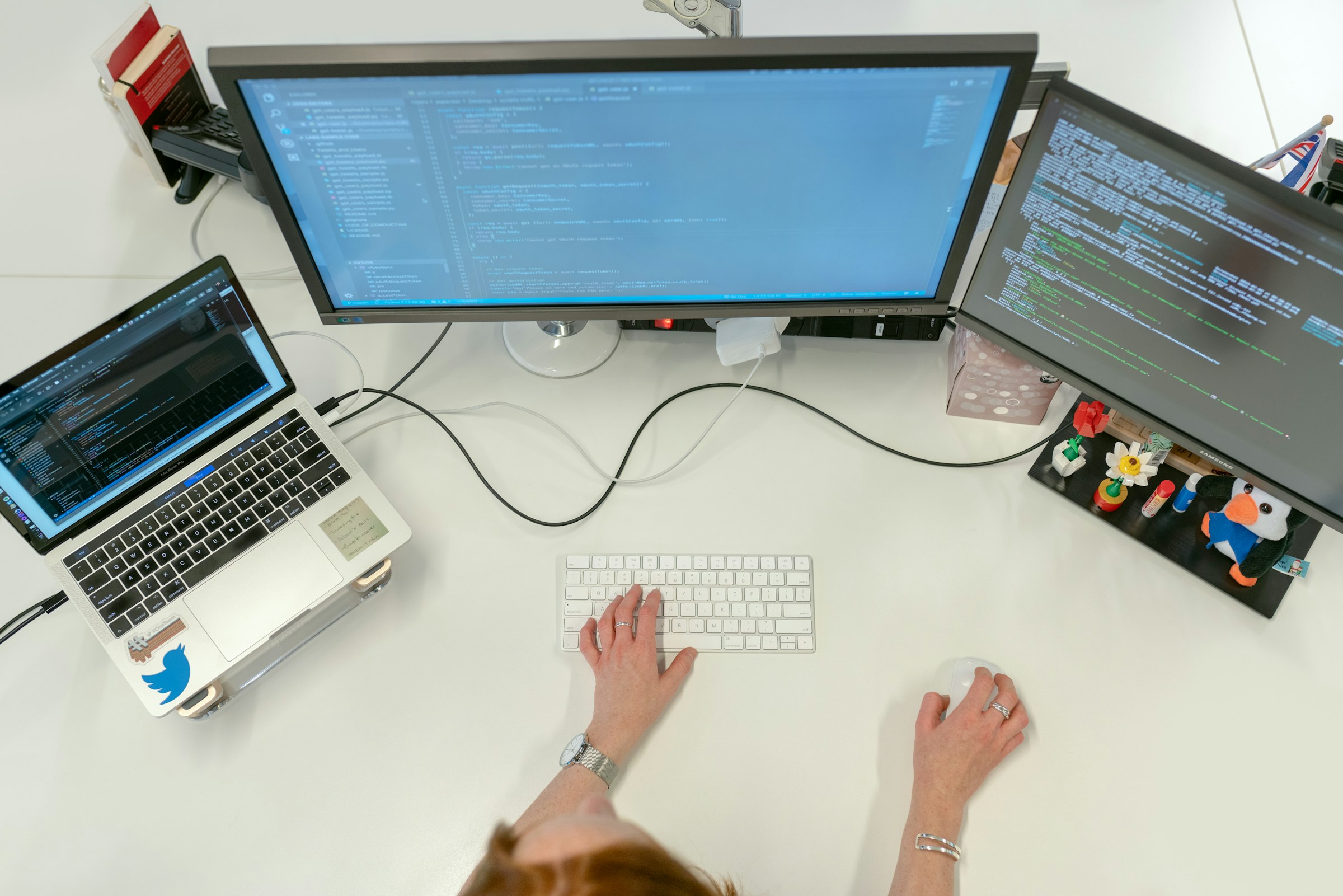
AI technologies provide a powerful toolkit for developers aiming to enhance their AI-Driven Software Development process. The three most impactful technologies are machine learning algorithms, natural language processing (NLP), and computer vision, each playing a unique role in modern software development.
Machine learning models are especially useful for optimizing code and predicting outcomes. By analyzing large datasets, these models can suggest the best approaches to coding challenges, identifying patterns and anomalies even the most seasoned developers might miss. For instance, anomaly detection algorithms can spot unusual web traffic behavior, allowing for quick fixes before issues escalate.
At PixlerLab, we’ve used ML models to predict algorithm performance, which helps us choose the most efficient ones for our projects. This speeds up development and ensures higher quality and performance in the final product. We’ve seen how selecting the right algorithm can halve processing time in data-heavy applications-a huge win for both speed and cost efficiency.
NLP is another big improvement for developers. It can generate code snippets from simple language inputs, cutting down the time spent on writing boilerplate code. Plus, NLP can automate documentation, keeping it accurate and up-to-date with minimal manual effort. This is a lifesaver in large teams where maintaining consistent documentation is a constant headache.
Imagine a tool that reads your code and automatically updates the documentation to reflect recent changes. That’s not just a time-saver; it ensures consistency and accuracy across the board. We all know how documentation can quickly become outdated-NLP tackles this head-on, making sure your docs are as dynamic as your code.
Integrating AI into the software development lifecycle requires a structured approach. Here’s how AI can be embedded into planning, coding, and maintaining software effectively. The lifecycle is not just a series of steps; it’s a continuous loop of improvement and adaptation.
# Example: Using AI for test case generation in Python
from ai_test_suite import auto_generate_tests

# Define your function
def add(a, b):
 return a + b

# Generate tests automatically
test_suite = auto_generate_tests(add)
test_suite.run()
Our team at PixlerLab has incorporated these steps into our workflow, resulting in faster development cycles and more reliable software. The key to success here is not just implementing AI but iterating and learning from each cycle. We’ve found that the more we integrate AI, the more intuitive our processes become.

To illustrate the benefits of AI in software development, let’s discuss a real-world project where AI played a important role. These examples aren’t just theoretical; they’re drawn from work we’ve done and challenges we’ve overcome.
A client approached us to improve their online retail platform’s recommendation system. Initially, their recommendations were manually curated, which was time-consuming and lacked personalization. By integrating machine learning algorithms, we developed a system that analyzed user behavior and preferences to provide more relevant product suggestions.
This project taught us several lessons: first, starting with a clear understanding of the data available is essential. Second, iterative testing and learning are key to refining AI models. And third, always be open to exploring new methods, as the tech landscape evolves rapidly. During development, we realized how crucial it was to keep the model updated with new data. As customer preferences evolved, so did our strategies.
However, potential pitfalls exist, such as over-reliance on AI predictions without human oversight. It’s critical to balance AI insights with human judgment to ensure ethical and accurate outcomes. Machine learning models can suggest actions based on data trends, but they lack the nuanced understanding of human ethics and cultural sensitivities. This balance is something we need to be vigilant about.
The market for AI tools is vast, but not all are created equal. Choosing the right tool can make or break your project’s success. Here’s a comparison of some popular platforms. Remember, the goal is not to find the “best” tool but the best tool for your specific needs.
Let’s talk about TensorFlow and PyTorch, the giants in the AI Development space. TensorFlow, created by Google, is highly flexible and versatile, making it suitable for large-scale projects. PyTorch, on the other hand, is praised for its simplicity and ease of use, which is ideal for research and rapid prototyping.
When selecting a platform, consider your project size, your team’s expertise, and the specific AI capabilities you need. Sometimes, the best tool for the job might be the one you’re most comfortable using. At PixlerLab, we’ve found that familiarity with a platform can often outweigh potential shortcomings. After all, a tool is only as good as the hands wielding it.
AI’s role in software development is set to expand, but where is it heading? Emerging technologies and evolving methodologies will shape the future landscape. There’s a palpable excitement in the air about what comes next.
Developers’ roles are evolving as AI tools become more prevalent. While AI can automate many tasks, it still requires human input for creativity, ethical decision-making, and complex problem-solving. Developers will increasingly act as curators of AI, guiding its applications and ensuring it aligns with project goals.
So why does this matter? Because as AI takes over more repetitive tasks, developers can focus on higher-level challenges, innovation, and strategic thinking. This shift could lead to more fulfilling roles and the opportunity to work on inspiring projects. We’ve seen developers at PixlerLab transition from mundane bug squashing to engaging in strategic design discussions-a much more rewarding use of their time and talent.
Looking ahead, we predict more integration between AI and other emerging technologies like quantum computing and blockchain. These combinations could unlock new potentials in development, creating smarter, more efficient systems. Imagine blockchains that self-optimize using AI algorithms or quantum systems that process AI computations in milliseconds.
AI won’t replace developers, but developers who use AI will replace those who don’t.
At PixlerLab, we’re committed to staying at the forefront of these trends, continuously adapting our methods to use these exciting technologies. It’s not about jumping on the latest bandwagon but about thoughtful integration of technology to achieve the best results.
Interested in boosting your software development process with AI? Explore PixlerLab’s AI solutions today!
AI SaaS Architecture
Jun 8, 2026
Per-seat pricing breaks when AI agents replace users. Choose an AI SaaS pricing model built for real margins.

AI SaaS Architecture
May 29, 2026
Claude vs GPT for SaaS development pricing, context, tools, latency, & the best model for agents, RAG, and…

AI SaaS Architecture
May 25, 2026
Explore AI-powered software development trends, skills, and their impact on modern tech careers.