
Per-seat pricing breaks when AI agents replace users. Choose an AI SaaS pricing model built for real margins.


When it comes to ai Driven Software Development life cycle, getting the fundamentals right matters. Embracing an AI-driven software development life cycle isn’t just about keeping up with trends. Honestly, it’s a strategic move forward. Picture this: your development team breezing through tasks that used to slow everything down, while AI nips errors in the bud before they escalate into costly problems. That’s the magic of weaving AI into the software development life cycle. We’ve seen it transform processes at PixlerLab, taking them from clunky, error-prone paths to dynamic, reliable systems. It’s all about leading the charge in a competitive field and, let’s face it, staying ahead.
Table of Contents
Look, traditional software development can feel like you’re lost in a maze of inefficiencies. Long timelines? Human errors? Yep, they’re pretty much the norm thanks to manual processes. Repetitive tasks gobble up resources without much return. What the industry really needed was a shake-up, and AI was the big improvement. It’s more than just an add-on-it redefines processes by speeding them up and cutting down on mistakes.
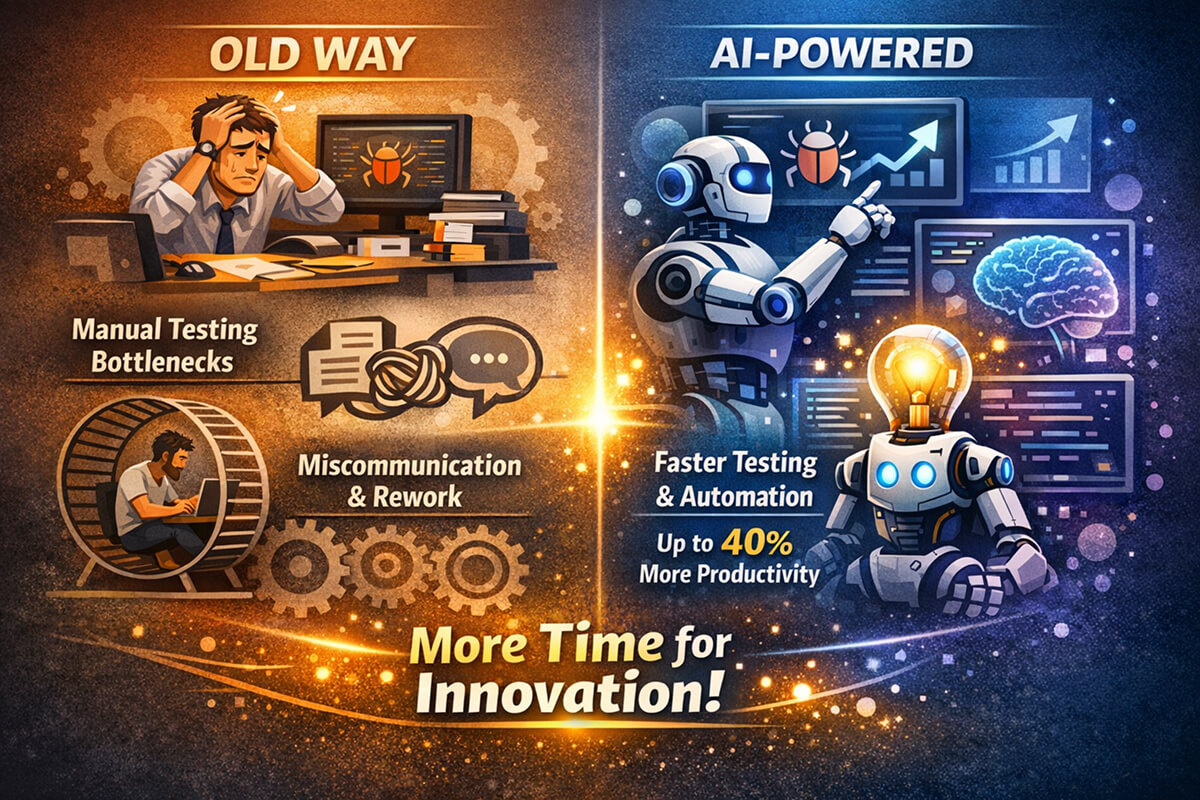
Testing, for instance, is a notorious bottleneck. Manual testing lets bugs slip through-leading to missed deadlines and bloated budgets. Repetitive coding can make devs feel like they’re caught in a hamster wheel. AI steps in to automate these tasks, snags bugs earlier, and lets developers tackle the tough stuff. At PixlerLab, we’ve turned these bottlenecks on their head with AI, and it’s been a morale booster, no question.
AI can increase productivity by up to 40%, according to McKinsey. This is more than just saving time—it’s opening space for innovation.
Miscommunication? Oh, it’s another thorn in the side of traditional methods. Requirements often get lost in translation, causing rework and wasted effort. Enter AI. Intelligent documentation and analysis tools keep everyone on the same page. They update and verify documentation against project goals, maintaining team alignment. AI tools like natural language processing (NLP) can even help decipher ambiguous requirements by suggesting more precise definitions. so everyone understands project needs, reducing the back-and-forth that typically bogs down progress.
Beyond technical challenges, traditional development often sticks to rigid methodologies like “waterfall,” which resist change. AI supports more flexible, agile methods by predicting potential roadblocks and adjusting plans on the fly, adapting to unforeseen changes. Agile environments thrive under AI’s guidance as it predicts sprint outcomes, identifies potential risks early, and helps prioritize tasks based on data, not guesswork. This dynamic adaptability is crucial for teams striving for nimble responses to market demands.
Creating an AI-driven architecture goes beyond just plugging in AI tools; it’s about fostering an evolving system. AI needs to be woven into every stage: planning, design, testing, and maintenance. Predictive analytics can forecast timelines and resource needs, while automated testing sniffs out errors faster than you can say “bug fix.” The architecture must support AI initiatives smooth, with the flexibility to evolve as AI technology advances.
So, where does AI make the biggest splash? During design, AI tools can suggest code tweaks and detect early bugs, cutting down the need for exhaustive bug-fixing sprints. AI also jazzes up project management by analyzing data to suggest best team configurations. It’s like having a savvy mentor guiding your project. Now, integration is vital. Use APIs and middleware to link AI systems with existing setups, crafting a simplified workflow. Scalability’s crucial too. Hybrid cloud solutions handle increased loads without sinking money into hardware. Picture data lakes and warehouses storing the data AI needs to be effective.
Distributed computing frameworks like Apache Hadoop handle massive datasets for solid AI models. Implementing these steps, like we did at PixlerLab, can cut development time by up to 30% and slash error rates. Such efficiency speeds up cycles and leaves room for innovation. Also, AI models can be trained to refine themselves, using new data to enhance their accuracy and efficiency over time, without exhaustive manual oversight. This continuous learning loop ensures the AI-driven architecture remains relevant and finely tuned to current project needs.
AI can turn the code review process inside out by identifying vulnerabilities before they snowball. Here’s a quick code snippet showing AI at work in code analysis:
import ast
import pylint.lint

def analyze_code(code):
 tree = ast.parse(code)
 pylint_opts = ['--disable=C0114', '--enable=W']
 pylint_lint = pylint.lint.Run(pylint_opts, do_exit=False)
 return tree, pylint_lint.linter.stats

sample_code = '''
def example_function():
 print("Hello, AI-driven Software Development!")
'''
tree, stats = analyze_code(sample_code)
print(stats)
This snippet shows how AI assists in code linting, smoothing the review process by flagging format issues without human help. AI-driven code reviews not only flag issues but also suggest solutions, pushing reviews forward and boosting code quality. Beyond flagging problems, AI suggests optimized paths, enforces standards, and refactors data-heavy blocks. Some tools even learn from past reviews to better forecast potential problem areas or anti-patterns.
Imagine channeling these insights into your version control system. With every commit, AI evaluates the code and gives immediate feedback, so developers can fix things up before human reviews. This approach speeds up the cycle and cuts time spent in review meetings. And AI can dynamically prioritize review tasks based on potential impact, ensuring that critical updates are addressed promptly. This smart prioritization helps teams focus on what’s vital, streamlining the entire review process.
Choosing the right tech stack is important for a successful AI-driven SDLC. At PixlerLab, TensorFlow and PyTorch are our top picks for machine learning because of their extensive libraries and active communities. For continuous integration, Jenkins is our go-to, with Selenium acing automated testing. These tools crank efficiency up a notch, though they can be a bear to set up initially.
Jenkins, with a rich plugin ecosystem, blends smoothly with AI tools, forming a backbone for continuous integration. Selenium stands strong for web app tests, ensuring broad coverage with little fuss. The key is creating a tech stack where these tools gel smoothly, encouraging component interaction. AI tools like Keras or Scikit-learn can be used for specific machine learning tasks, providing simplicity and ease of use that complements more complex frameworks.
Data infrastructure is crucial. AI needs muscular data processing capabilities, so databases like MongoDB or PostgreSQL are invaluable. Aim for a tech setup as flexible and intuitive as the AI it supports, keeping an eye on performance metrics like latency. Machine learning ops (MLOps) platforms like MLflow or Kubeflow are becoming must-haves. They simplify model deployment and monitoring, keeping performance best post-deployment. Picking platforms supporting interoperability and scalability ensures your stack can grow with tech advances.
Integrating AI into your tech stack isn’t just about picking the right platforms-it’s about making sure they mesh with current tools and workflows. Spending time understanding how these tools fit within existing processes can save countless hours later. In a recent project, we cut bug discovery time from days to mere hours using AI-enhanced testing. This improvement not only boosts productivity but also enhances product reliability. Latency isn’t just about speed; it’s how fast developers can adapt to market shifts. When the tech stack is finely tuned, it becomes an enabler of rapid adaptation to change, a crucial asset in fast-paced development environments.
AI tools shine by spotting inefficiencies and providing insights that let teams make quick, informed calls. At PixlerLab, AI has been key in cutting downtime and keeping projects on track and under budget. By folding AI-based analytics into performance monitoring, you can tackle bottlenecks proactively, keeping systems humming at peak performance. These insights improve resource allocation and enhance user experiences by ensuring service reliability. AI can even foresee failures before they happen. It analyzes historical and current data to predict component failures so teams can preemptively act to minimize downtime.
The economics of scaling AI across the SDLC can’t be overlooked. Organizations should weigh infrastructure and budget limits before going all in. But when done right, it pays off big, slashing time to market and boosting quality. Using a complex AI model for simple tasks can be inefficient. Make sure tool capabilities fit project needs. Another slip-up? Overlooking the learning curve with new AI tools, which needs training time. Proper training and onboarding are crucial to ensure smooth tool adoption without productivity dips.
Then there’s using inadequate training data. AI is only as sharp as its training data, so teams need comprehensive datasets that mirror project challenges and goals. Watch out for over-automation; while AI can handle lots of tasks, some need human intuition and creativity. Balance is key-automation with human oversight keeps quality and innovation in check. A balance ensures that AI complements human skills instead of overshadowing them.
A frequent stumble is skimping on early stakeholder involvement. Without clear expectations from the get-go, teams might implement misaligned solutions, squandering resources and missing out on insights. Regularly involve stakeholders to ensure the developed AI tools are aligned with their needs and expectations, reducing the risk of project derailments.
Regularly evaluate AI tools and processes to keep them aligned with project and business goals. This ongoing review should be part of a broader commitment to continuous improvement, allowing teams to pivot and adapt as new tools and challenges emerge. Establish feedback loops where lessons learned feed back into the AI tool refinement process, ensuring continuous evolution aligned with market demands.
The impact of an AI-driven SDLC is felt across industries. Here’s a taste:
AI amplifies agile methods by offering predictive analytics for sprint planning, reducing bottlenecks. A leading tech firm found project completion rates improved by 25% with AI insights. In healthcare, AI-driven cycles have revamped personalized medicine software by real-time data analysis, recommending treatment workflows, and speeding up software creation.
In finance, AI models predict stock trends and automate trading, refining strategies through rapid large dataset processing. AI’s predictive power helps hedge funds and banks mitigate risks and explore new financial opportunities. Retail’s on board too. AI applications personalize shopping with real-time analytics, suggesting tailored products and boosting satisfaction and sales. Customers benefit from AI’s intuitive understanding of their preferences, enhancing the shopping experience.
AI-driven strategies are also shaking up logistics, fine-tuning supply chains by forecasting demand spikes and restocking schedules to cut waste and ramp up efficiency. Imagine AI systems iterating through warehouse logistics, optimizing both time and space in ways human planners might overlook. Essentially, an AI-driven SDLC laces AI technologies throughout each software development stage, boosting traditional methods with automation and predictive insights for more efficient, reliable, and creative software development.
An AI-Driven Software Development life cycle integrates artificial intelligence into every phase of software development, from planning to maintenance, enhancing efficiency, accuracy, and speed.
AI ramps up development by increasing speed, accuracy, and efficiency. It automates monotonous tasks, reduces human error, and provides insights through data analysis, enabling swift decision-making. Developers can then focus on creative and strategic tasks, boosting overall productivity.
Reliable AI tools include TensorFlow and PyTorch for machine learning, Selenium for automated testing, and Jenkins for continuous integration. These tools offer comprehensive features and community support, streamlining the development process. Evaluating project-specific needs will guide effective tool implementation. AI can’t fully replace human developers. It amplifies human abilities by managing repetitive, data-heavy tasks, freeing up developers for strategic decisions and creative problem-solving. Human oversight is still essential for creative and nuanced decision-making.
Challenges include selecting the right tools, ensuring compatibility with existing workflows, and addressing the learning curve of new technologies. Data quality and model training are crucial for successful AI integration. Align tools with specific needs, and invest in training and refining AI models.
The AI-driven software development life cycle marks a significant advance in building, testing, and deploying software. By integrating AI-enhanced processes, development teams can expect improvements in speed, reliability, and innovation. The future of software development is intertwined with AI, and adapting is essential to stay competitive. At PixlerLab, we’ve witnessed these advantages firsthand, and we believe AI will continue to reshape software development. As AI evolves, its integration into development will deepen, helping teams stay ahead in a tech-driven world.
Ready to elevate your software development game? Reach out to PixlerLab today to integrate AI into your development lifecycle! Our expert team is poised to help you harness AI’s full potential to craft smarter, faster, and more efficient software solutions.
AI SaaS Architecture
Jun 8, 2026
Per-seat pricing breaks when AI agents replace users. Choose an AI SaaS pricing model built for real margins.

AI SaaS Architecture
May 29, 2026
Claude vs GPT for SaaS development pricing, context, tools, latency, & the best model for agents, RAG, and…

AI SaaS Architecture
May 25, 2026
Explore AI-powered software development trends, skills, and their impact on modern tech careers.