
Discover what makes an AI development agency in Singapore stand out in the growing AI market.


Ever wondered how AI is shaking up the world of software development? Trust us-it’s not just a buzzword; it’s revolutionizing the field. At PixlerLab, we’ve watched AI-Powered Software Development and modernization turn the traditional approach upside down. Seriously. From startups to massive enterprises, AI isn’t merely a tool; it’s a complete big improvement for problem-solving and system design. AI’s role in this space goes beyond automating mundane tasks. It transforms entire workflows, optimizes resource allocation, and reduces the time-to-market for new products. The result? Businesses can respond more swiftly to customer demands and market trends. We’ve seen AI breathe new life into legacy systems that used to be considered unchangeable relics of a bygone era. AI-based modernization is about aligning IT systems with modern strategic needs while ensuring they remain adaptable for future innovations.
Table of Contents
AI in software development isn’t just about fancy algorithms. It’s about leveraging machine learning, neural networks, and automation to make the development process much smarter. Less time-consuming, more creative. That’s the key. At PixlerLab, AI helps us identify system bottlenecks and squash bugs, which means faster and better-quality software. We’re talking about implementing AI models that predict code vulnerabilities before they become security issues, or using natural language processing to automate complex customer service scripts.
Legacy systems can be a nightmare-inefficient, costly, and downright outdated. Modernizing with AI-driven solutions bridges the gap with current tech and guarantees future scalability. Imagine being stuck with systems from decades ago, unable to connect with today’s tools. AI modernization breathes new life into these systems by automating complex processes and offering intelligent insights. These insights can suggest how to re-architect systems for maximum efficiency, making them more agile and responsive to future demands. Integration with AI tools doesn’t just bring systems up to current standards; it can catapult them ahead of the curve, opening up new opportunities for innovation.
In a competitive digital landscape, standing still isn’t an option. Shifting consumer expectations and rapidly changing technology mean businesses must keep pace or risk being left behind. With modernization, we breathe new life into outdated systems, making them more user-friendly and efficient. This inevitably leads to happier customers and more engaged employees. Our team at PixlerLab has seen firsthand how AI modernization not only rejuvenates software systems but also invigorates entire teams. When technology supports them, developers and managers are free to innovate and focus on strategic goals rather than fight fires daily.
Traditional software development has its fair share of headaches, from process bottlenecks to outdated systems. AI steps in as a transformative force-not only changing how we tackle these challenges but reimagining what’s possible in software. It’s not just about working faster; it’s about working smarter. AI helps simplify processes, reduce manual errors, and foster a culture of innovation. With traditional development practices, teams often spend an inordinate amount of time on repetitive tasks, leading to burnout and inefficiency. AI automates these mundane tasks, allowing developers to focus on creative problem-solving and strategic initiatives.
We’ve all been there-stuck in endless meetings or waiting forever for feedback. The inefficiencies in traditional development are pretty glaring, with prolonged cycles and human error. AI helps by automating repetitive tasks and offering real-time insights, which enhances teamwork and decision-making processes significantly. Legacy systems, once modern, now hold us back with outdated code and poor integration. They’re costly to maintain and riddled with security vulnerabilities. At PixlerLab, we’ve faced these challenges head-on by layering in AI-driven tools that automate workflows, transforming systems into more agile and forward-looking frameworks. Automation isn’t just a benefit-it’s a necessity when aiming for competitive efficiency.
Legacy systems often become the bottlenecks in a company’s growth trajectory. they’re expensive to maintain, difficult to integrate with new technologies, and fall short of delivering the security standards required today. AI makes modernization feasible by offering solutions that were previously impossible. Imagine a healthcare system using outdated software that can’t handle modern patient data integrations-costly errors and inefficiencies are inevitable. AI-driven modernization not only updates these systems but enhances them, introducing predictive analytics for better patient care or integrating smoothly with cloud-based solutions to offer improved performance and reliability. The goal is to convert these limitations into opportunities for growth.
Designing an AI-powered system isn’t about just adding new tools. Think of it like chess-you have to consider several steps ahead. The architecture must integrate AI tools into existing workflows, remaining flexible and flexible. It’s a delicate dance between innovation and stability. Key components of an AI-driven system include cloud computing for scalability, agile methodologies for flexibility, and continuous integration for code quality. Platforms like AWS or Azure provide the solid infrastructure, while agile practices help teams pivot quickly. Tools such as Jenkins or GitLab CI maintain a smooth flow of quality code.
When designing an AI-driven system, the architecture needs to be both forward-thinking and solid. This involves selecting platforms that can scale with demand while maintaining best performance. For instance, cloud platforms like AWS offer machine learning services that can be easily integrated into your existing systems, providing the computational power needed for complex AI tasks without requiring a complete infrastructure overhaul.
Another aspect is choosing the right data storage solutions. AI thrives on data-the more, the better. However, storing and managing this data efficiently is crucial. Systems like Hadoop or Apache Kafka can handle large datasets, allowing for smooth data flow and real-time analytics. so the AI modules have access to up-to-date information, necessary for making accurate predictions or offering practical insights.
Integrating AI into workflows isn’t just about slapping on new tools; it’s about ensuring they embed well into existing processes. So there’s an uptick in efficiency and the development lifecycle gets a boost, letting teams focus more on innovation. Picture it like upgrading a car’s engine while in motion-AI makes it a smooth ride. The integration process should be gradual, allowing teams to adapt to new tools while maintaining their productivity. It’s also critical to keep the end-user in mind. AI should enhance the user experience, making interfaces more intuitive and systems faster.
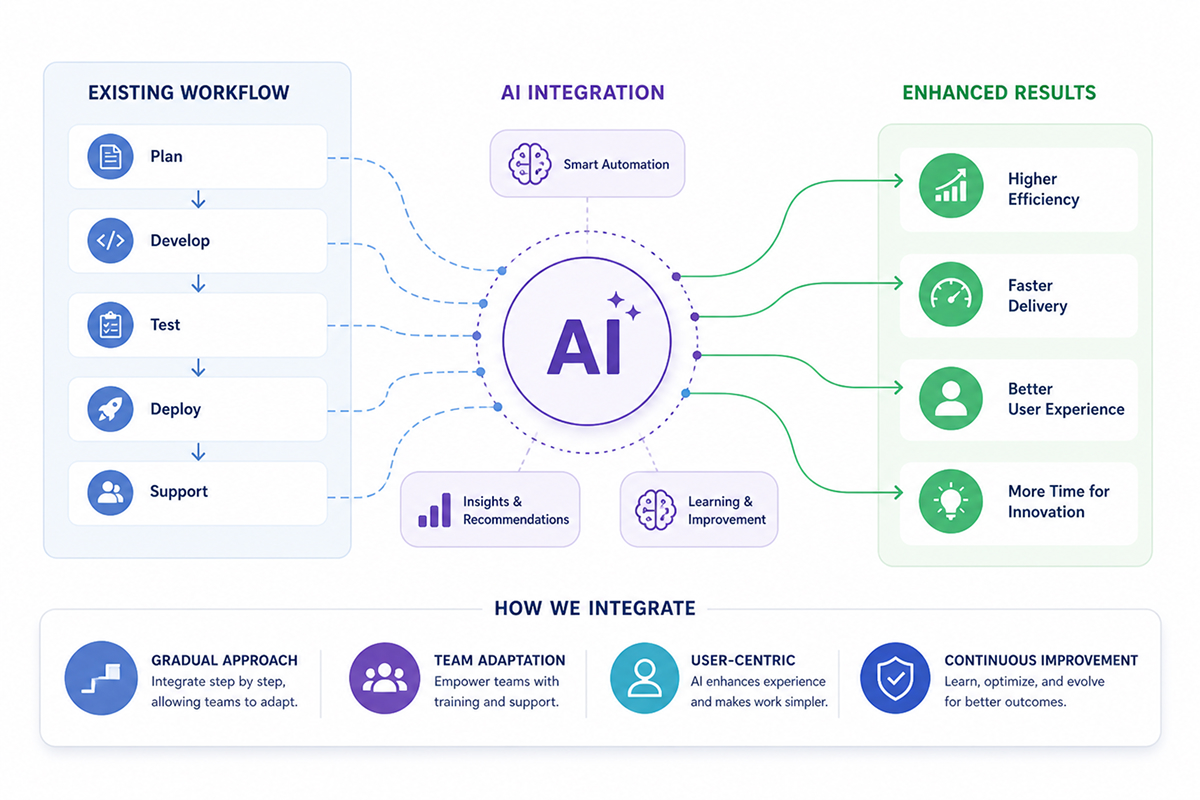
Implementing AI in software development doesn’t have to be daunting. Honestly, the thing is, it’s about picking the right tools and following a structured integration strategy. Here’s a step-by-step guide to get you going:
Choosing AI tools means evaluating platforms based on specific needs like predictive analytics or code optimization. It’s not about picking the flashiest tool; it’s about finding the right fit. Depending on your project, tools like TensorFlow or Jenkins could be perfect choices. Integrating AI systematically involves assessing workflows, identifying areas primed for AI, and implementing changes methodically. At PixlerLab, we roll out AI features gradually, ensuring change is managed effectively, and stakeholders are on board. Skipping buy-in? Big mistake. Ensure everyone is aligned with the vision and understands the benefits of the AI tools being implemented.
Start small, think big. A pilot project is your playground for innovation without the risk.
After selecting the tools and experimenting with a pilot, it’s time to integrate them into the full-scale architecture. This isn’t a one-time affair-it’s a continuous process of adaptation and improvement. Regularly updating your AI models with new data ensures they remain relevant and effective. It’s a bit like tending to a garden: continual care and attention yield the best results.
This is where AI gets practical-enhancing code optimization and predictive analysis. Imagine code that doesn’t just work-it improves itself continuously. AI is about building smarter systems that adapt and evolve with every iteration.
AI can refactor code, boosting both performance and readability. Here’s a simple Python function shown through AI-driven improvements: In large codebases, even tiny inefficiencies can multiply. AI optimizes in ways that are non-obvious but very effective. And AI can identify patterns in your code that could lead to bugs or inefficiencies. By incorporating machine learning models, your development environment can suggest optimizations or flag potential issues before they become a problem. This proactive approach to coding significantly enhances software quality and reliability.
def find_max(values):
 # Using AI-driven refactoring for efficiency
 return max(values) if values else None

# Original function might have had multiple loops; AI reduces complexity
AI for predictive code analysis forecasts bugs or performance issues. Models detect patterns signaling potential failures, giving developers an early warning. It’s like having a crystal ball for software. Imagine how much more efficient your team can be when potential issues are caught early in the development cycle, saving both time and resources. This proactive identification of problems leads to more stable releases and less stress during the final stages of deployment.
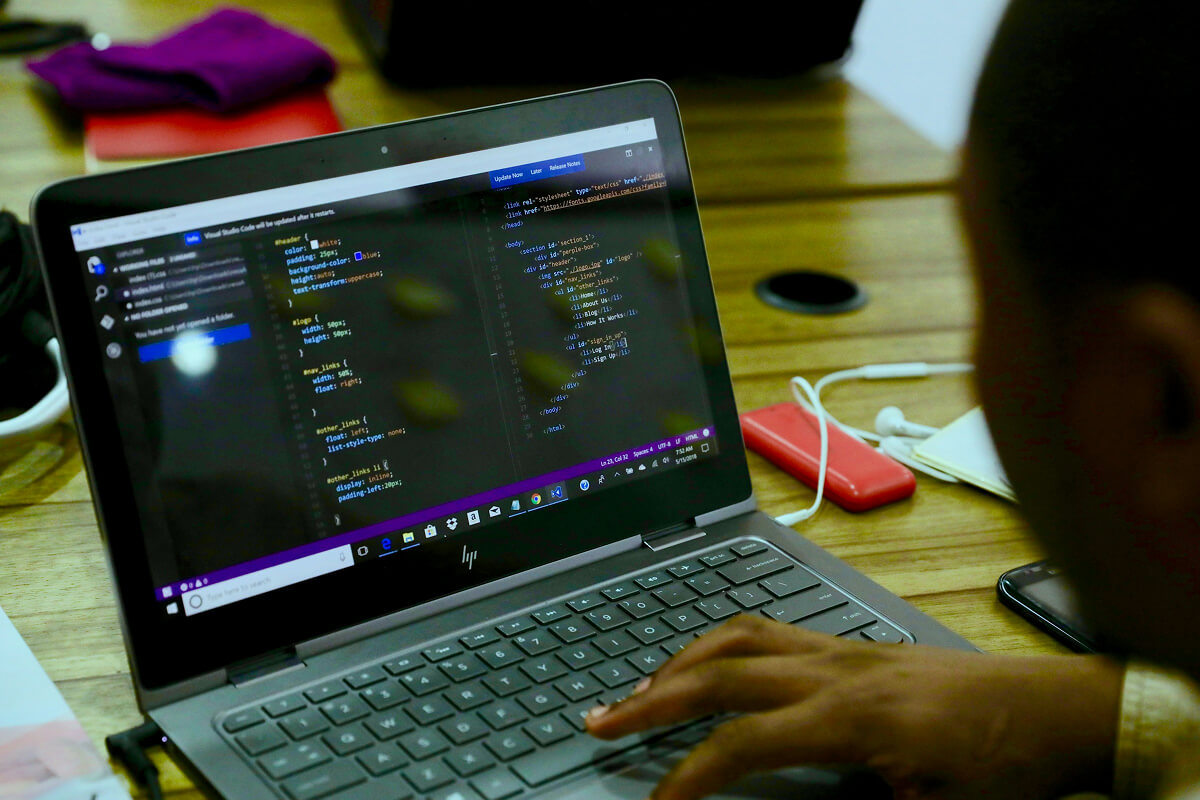
Core technologies include machine learning frameworks like TensorFlow or PyTorch, cloud services like AWS or Azure, and DevOps tools like Jenkins. These form the backbone for AI-driven development, making processes both efficient and flexible. The integration of these technologies creates a solid environment for development and deployment, allowing teams to innovate without worrying about the underlying infrastructure.
When selecting your tech stack, consider community support, integration capabilities, and future scalability. It’s about what’s best now and what stays relevant as needs change. A flexible stack-Python for scripting, TensorFlow for AI, and Docker for containerization-is often ideal. At PixlerLab, we focus on adaptability and strong support networks when choosing technologies.
And consider how these technologies interact. A well-integrated stack ensures smooth communication between components, reducing the likelihood of errors and making the system more resilient. The right blend of technologies can significantly impact your team’s productivity and your product’s performance. Metrics like time saved per cycle, error rates before and after AI, and deployment frequency reveal AI’s impact. For example, a 30% reduction in deployment time thanks to AI-based testing tools unmistakably shows improved efficiency. These metrics provide tangible proof of AI’s effectiveness and offer valuable insights for continuous improvement.
Also, tracking user satisfaction can offer an indirect measure of AI’s success. Happier users tend to indicate that the system is performing well and meeting their needs. Regularly collecting and analyzing feedback can help you gauge the impact of AI-driven changes and adjust your strategy accordingly.
Using AI for testing automation can reduce bug detection time by 30%, improving software quality and shortening time-to-market. By analyzing data, we’ve consistently found improvements in deployment times and error rates, underscoring AI’s significant impact. For example, in one of our projects at PixlerLab, implementing AI in the testing phase led to a 40% reduction in time spent identifying bugs, allowing for quicker iterations and faster customer feedback loops.
For more insights on optimizing the software development lifecycle with AI, check out our AI Driven Software Development Lifecycle Optimization guide.
AI has its pitfalls. Understanding common mistakes can save time and resources. Mistakes aren’t just errors-they’re opportunities to learn and improve. One major error is jumping into AI tools without fully grasping them. AI isn’t a cure-all solution. Another pitfall is over-relying on AI, forgetting the necessary human oversight. AI enhances but doesn’t replace human insight-never forget that. Always validate AI-generated insights with human judgment to ensure they’re practical and applicable.
Modernization often stumbles due to poor planning and inadequate testing. Systems can become overly complex if integration isn’t handled carefully. Balance between automation and manual processes is crucial for flexibility and adaptability. Failing to properly train staff can also lead to underutilization of AI capabilities. If your team doesn’t understand how to operate or interpret AI tools, you won’t reap the full benefits of modernization. Make training a priority alongside implementation.
Let’s dive into real-world applications where AI has made a substantial impact on software development and modernization. These examples highlight AI’s broad usability across various industries.
In fintech, AI is reshaping fraud detection and customer service. Predictive analytics scrutinize transaction patterns in real-time, flagging fraud quicker than traditional methods. We’ve assisted fintech companies in implementing these solutions, significantly slashing fraudulent activities and boosting customer trust. For example, a fintech startup collaborated with us to integrate a machine learning model that analyzed transactions across multiple factors for fraud detection. The result? A 70% reduction in false positives, improving user experience and operational efficiency.
Consider a manufacturing company leveraging AI to modernize inventory management. Through AI-driven analytics, they simplify the supply chain, cutting costs by 20% and improving delivery times. AI isn’t just about refining processes-it’s about transforming them entirely. AI-driven insights can predict demand surges or supply shortages, allowing companies to adjust their strategies in advance, So optimizing production schedules and minimizing waste.
Explore more about AI Development Agencies in London for insights into companies successfully using AI in modernization. In healthcare, for example, AI has been used to simplify patient management systems, leading to more personalized care and reduced administrative burdens. Another notable success is in retail, where AI-powered systems enhance inventory management and predict customer buying patterns, dramatically improving sales forecasting and reducing stockouts.
AI-Powered Software Development uses AI technologies like machine learning to simplify and enhance the development process. This includes automating tasks, improving code quality, and predicting potential issues. AI aids modernization by updating legacy systems, automating processes, and providing insights through data analysis. It bridges the gap between outdated systems and current tech capabilities. AI helps in modernization by automating routine tasks, improving data analysis, and enabling systems to communicate more effectively with newer technologies. This process enhances system performance and ensures scalability for future requirements. AI-driven algorithms can refactor inefficient legacy code and integrate smooth with modern systems to extend their life and capabilities.
Industries like fintech, healthcare, manufacturing, and retail benefit significantly from AI by improving processes, enhancing customer experiences, and optimizing operations. AI provides these sectors with tools to analyze data in real-time, predict trends, and automate processes that were previously labor-intensive. This enhances efficiency, reduces costs, and opens new opportunities for innovation. Challenges include technical debt from improperly integrated systems, cultural resistance to change, and security concerns from increased data use. Training and communication are crucial to overcome these barriers. Ensuring all team members understand the AI systems and their benefits can foster a more supportive environment for AI initiatives.
Absolutely. Small businesses can use AI to optimize operations, improve customer service, and gain insights from data analysis. Flexible AI solutions provide significant advantages, from automating customer interactions to optimizing supply chains, allowing small businesses to compete more effectively with larger enterprises.
The impact of AI in software development and modernization is undeniable. By integrating AI, developers simplify processes, minimize errors, and enhance efficiency. Embracing AI is essential for staying competitive. The future promises even more innovative uses of AI, reshaping industries and creating new opportunities. AI doesn’t just optimize processes; it redefines what’s possible in software development. As AI evolves, staying informed and adaptable is crucial for developers and organizations. The road to AI integration is a journey filled with potential and innovation.
The future of AI in software development promises deeper integration and smarter systems. At PixlerLab, we’re excited to be at the forefront of this transformation, guiding clients through AI integration complexities. The road is challenging but full of unprecedented opportunities. We envision a time when AI becomes even more intuitive, enabling systems to learn and adapt autonomously, sparking the next wave of innovation in all sectors.
At PixlerLab, we’re experts in AI Development and modernization, offering tailored solutions to meet your needs. Our team is equipped with the latest technology and insights to drive your transformation journey. We’re not just implementing solutions; we’re partnering with you to ensure success. Ready to embrace the future of software development? Contact PixlerLab today to discover how our AI-powered solutions can transform your business. Let’s build the future together, leveraging AI to achieve your goals.
Claude Development
Jul 23, 2026
Discover what makes an AI development agency in Singapore stand out in the growing AI market.

Claude Development
Jul 1, 2026
Explore leading generative AI development agencies in the USA, their services, and success stories.

Claude Development
Jun 29, 2026
Model Context Protocol : what it replaces, how it speeds AI MVPs, & production-ready integrations today.