
Mobile app development with AI-powered
features.
Start a projectA phone app is judged on a bad connection, on a cheap device, in one hand.
Six things our mobile builds have had to prove in the field rather than in a simulator. Every figure links to the write-up it came from.
Three platforms, one backend
Web, iOS and Android launched together rather than staggered, with the contract defined once and tested once.
2-in-1customer app and partner appPaired apps, one build
Two audiences, one codebase, one backend. The shared half gets built once, which is where the time comes back.
3 weekstwo connected apps, concept to launchFast when it matters
Owner app and service-provider app, scoped so the overlap was built once and the differences stayed small.
4Xsession completion rateSessions that finish
Completion is the only honest number for an audio product, so the build was shaped around finishing a session rather than starting one.
65%increase in return usersPeople who come back
Retention came out of the boring things: fast start, playback that survives a tunnel, and nothing between opening the app and getting value.
5 weeksa mobile-first CRM reps actually openBuilt for the field
Designed for a rep in a van with one hand free. If logging a visit takes more than a few seconds, it does not happen.
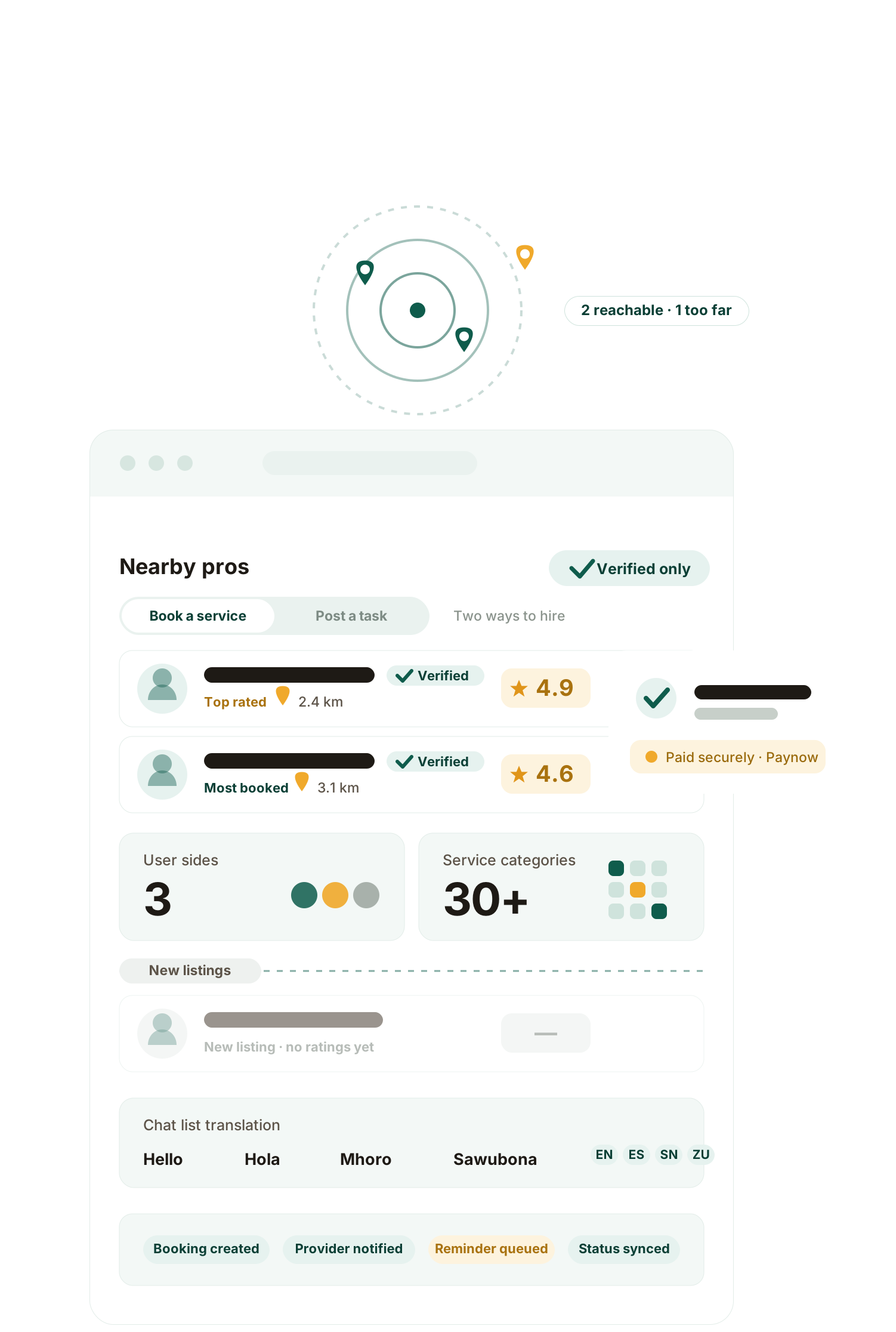
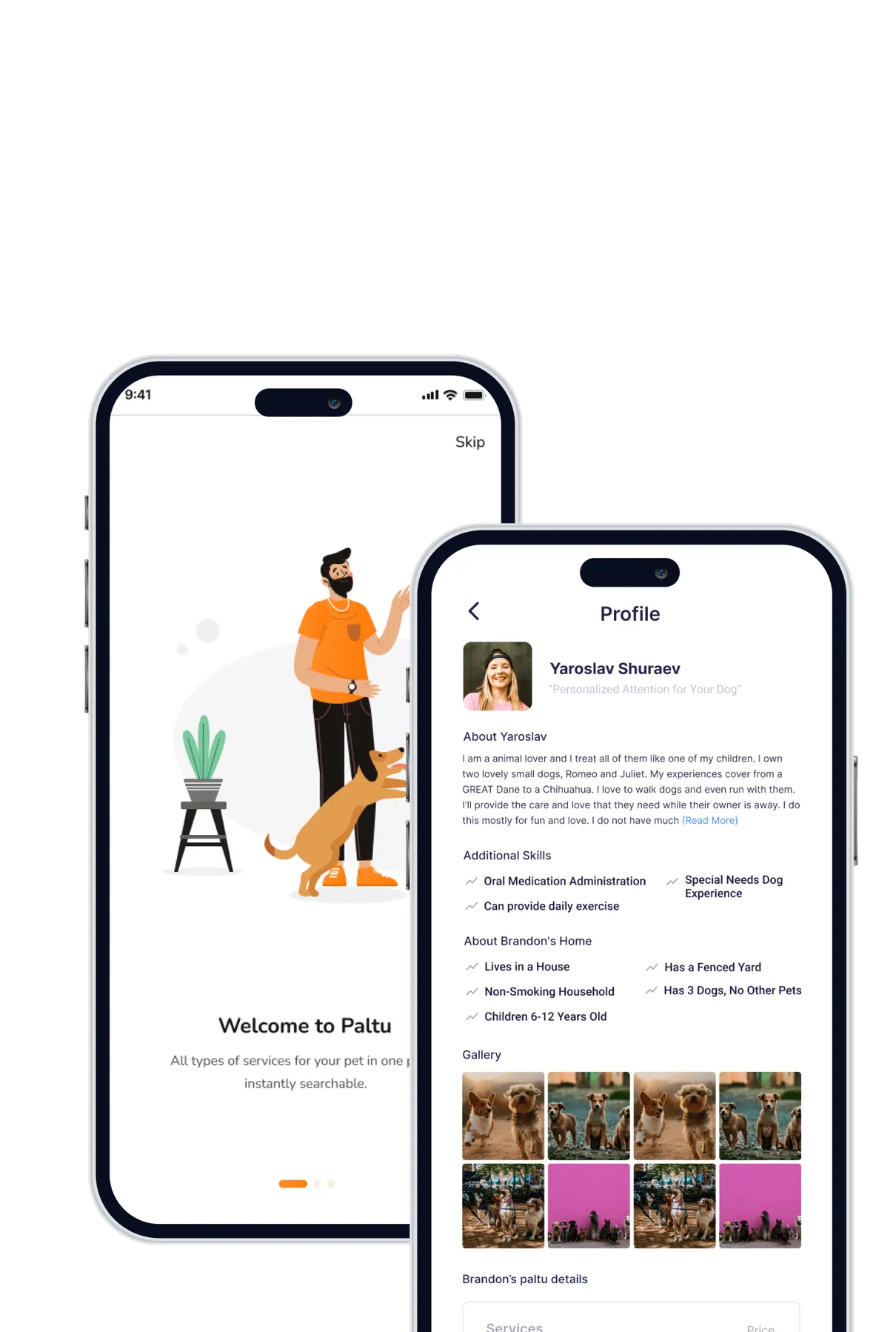
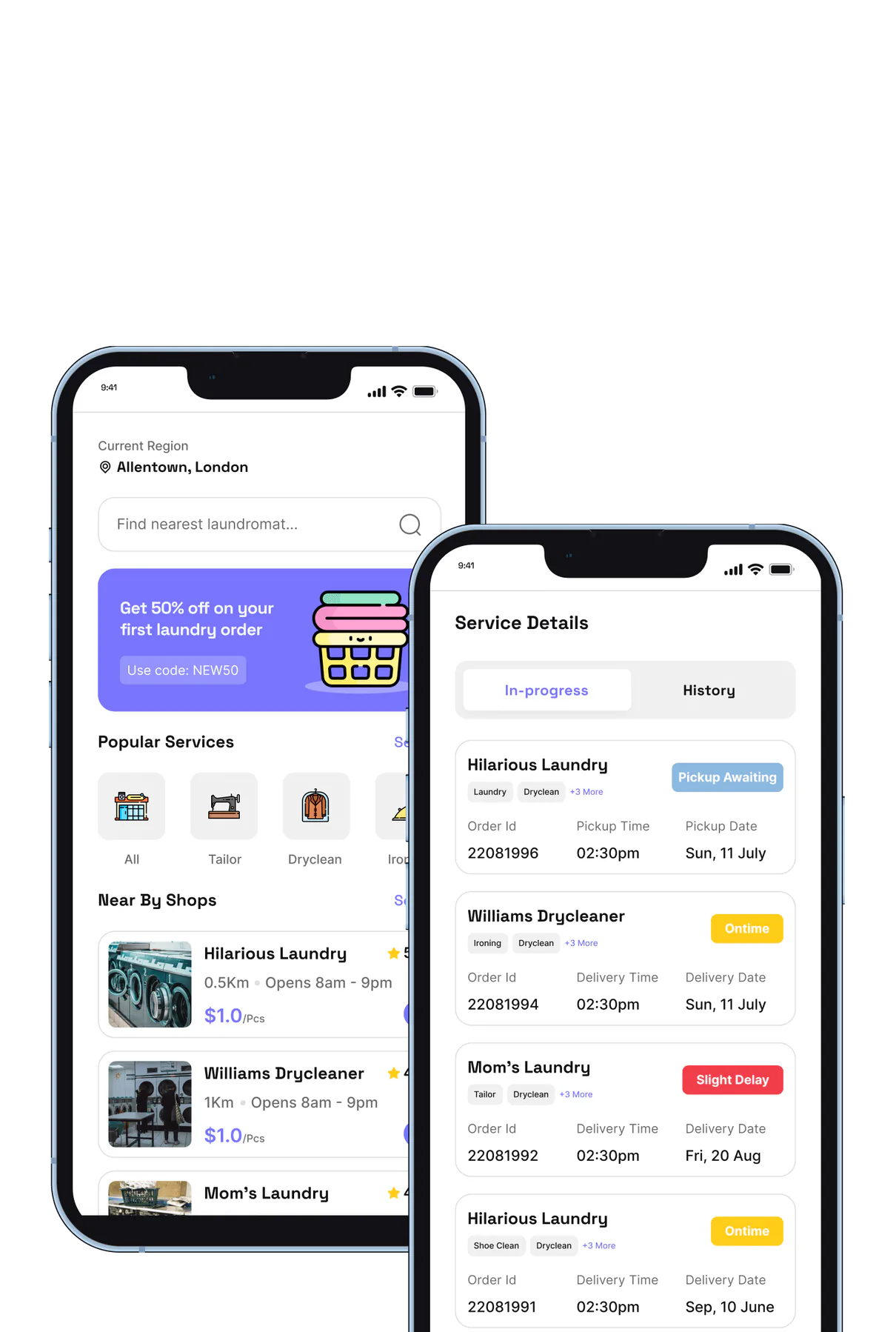
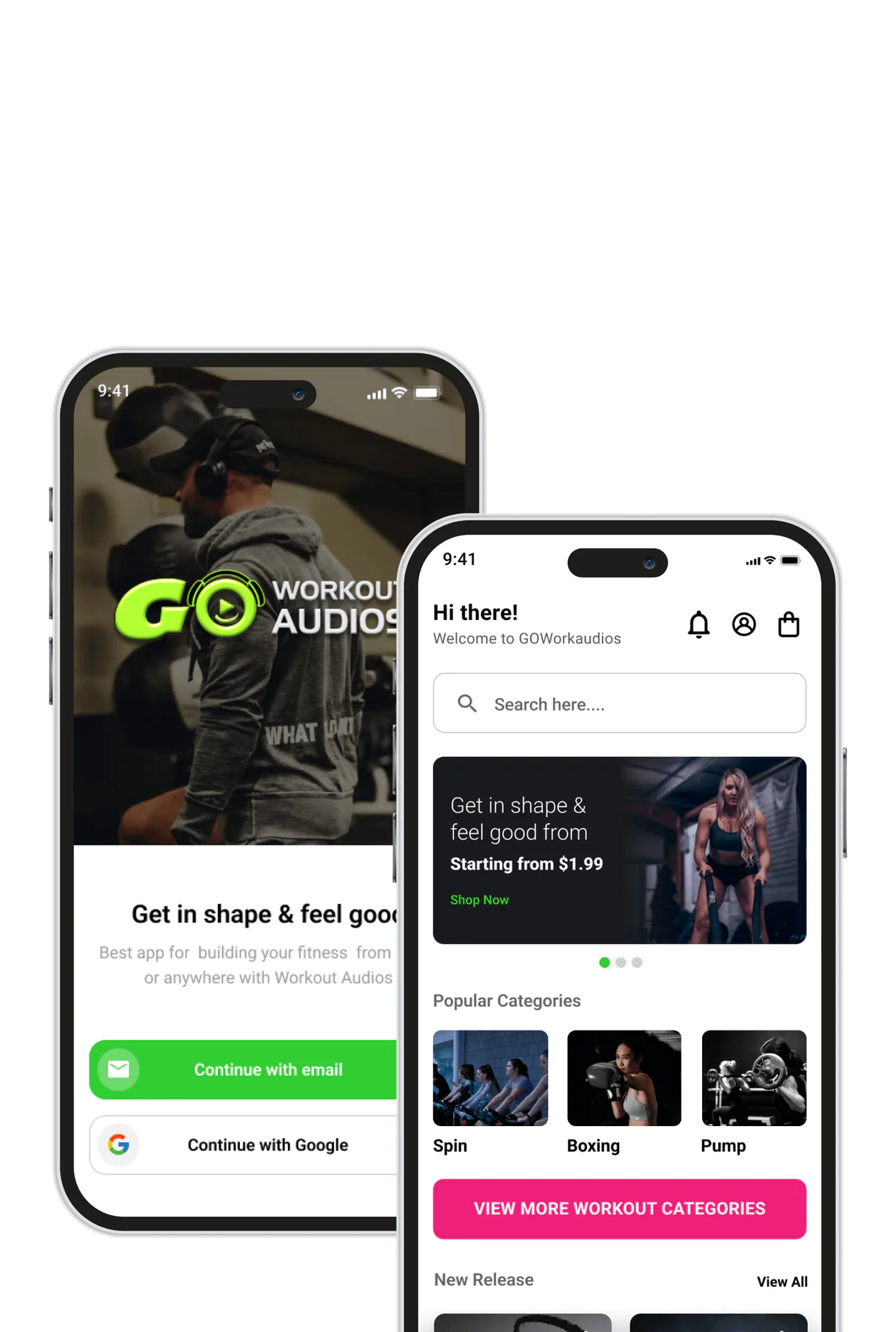
Five kinds of app, and what each one has to survive.
Marketplace & On-Demand Apps
Matching, live status, payments, and two audiences who need different apps but the same data underneath.
The unhappy pathPaired Customer + Partner Apps
Two apps, one backend, and a state machine both sides agree on without drifting apart.
The shared halfField & Operations Apps
Capture in seconds, on a bad connection, from someone with one hand free and somewhere else to be.
Offline toleranceContent & Media Apps
Playback that starts fast and survives a tunnel, plus the session state worth coming back to.
Time to first playAI-Powered Consumer Apps
A Claude feature that earns its place — a stylist, an advisor — rather than a chat box in the corner.
The one job it doesWhat a mobile build we ship is made of.
- 01PlatformNative or cross-platform
Cross-platform for most early products because it halves the surface; native where performance or a platform API genuinely demands it. Decided on the product, not on preference.
- 02NetworkWhat happens on a bad connection
Designed for patchy service and cheap devices from day one. Retrofitting offline tolerance means rewriting the data layer, which is the expensive way to learn this.
- 03Backend contractThe API every surface agrees on
Defined once and shared. Simba Tasker runs web, iOS and Android off one backend for exactly this reason.
- 04AI featuresWhere intelligence earns its place
Scoped to a specific job — a stylist on Jolene, an advisor on VREA — and kept behind our own interface so the model stays swappable.
- 05Store submissionGetting through review
Review guidelines, privacy declarations and store assets treated as build work, because they are, and because they are where unplanned weeks come from.
- 06Post-launchWhat happens after 1.0
Crash reporting, staged rollouts and a release cadence your own team can run. The build is not finished while it still needs us.
Why Our Mobile Builds Hold Up
Three decisions, each one made early because it cannot be made late.
One backend contract, every surface
3 surfaces, one APISimba Tasker runs web, iOS and Android off a single shared API. Defining the contract once is what lets three platforms launch together instead of one at a time, and it is why a change gets made once rather than three times and inconsistently.
Designed for the worst connection you have
65% more return usersPatchy service and cheap devices are the normal case for most of our users, not the edge case. Building for that from day one costs very little; retrofitting it means rewriting the data layer after the product is already live.
AI with one job, not a chat box
Claude stylist · 7 weeksOn Jolene it is a stylist, on VREA an advisor. Scoping a Claude feature to the single job it does well is what keeps it genuinely useful, and what keeps it inside the release window instead of pushing it into the next one.
Frequently Asked Questions.
Do you build for iOS, Android, or both?
Both. We build native iOS (Swift/SwiftUI) and Android (Kotlin/Jetpack Compose) apps, as well as cross-platform apps using React Native or Flutter. We recommend cross-platform for most early-stage products to reduce cost and time-to-market, and native for performance-critical or highly platform-specific applications.
Can you add AI features to our existing mobile app?
Yes. We can scope and integrate AI capabilities into an existing app-such as a Claude-powered assistant, intelligent search, content personalisation, or automated analysis features. This involves API integration, UI updates, and backend changes depending on what you're adding.
How long does mobile app development take?
A focused mobile app with core features typically takes 8–14 weeks from design to App Store submission. Apps with complex backend requirements, third-party integrations, or AI features may take 16–24 weeks. We work in focused 2-week sprints with regular client reviews so you can see progress throughout the build.
What does mobile app development cost?
Pricing depends on scope, platform, and feature complexity. A cross-platform MVP typically starts from $15,000–$30,000. A fully featured app with backend infrastructure, AI integrations, and polished UI typically ranges from $40,000–$100,000+. We provide a detailed fixed-scope quote after a discovery call.
Idea in your head? Let’s
bring it to life.
Got a project? A wild idea? Or just want to say hey?
We're here for all of it — reach out anytime.