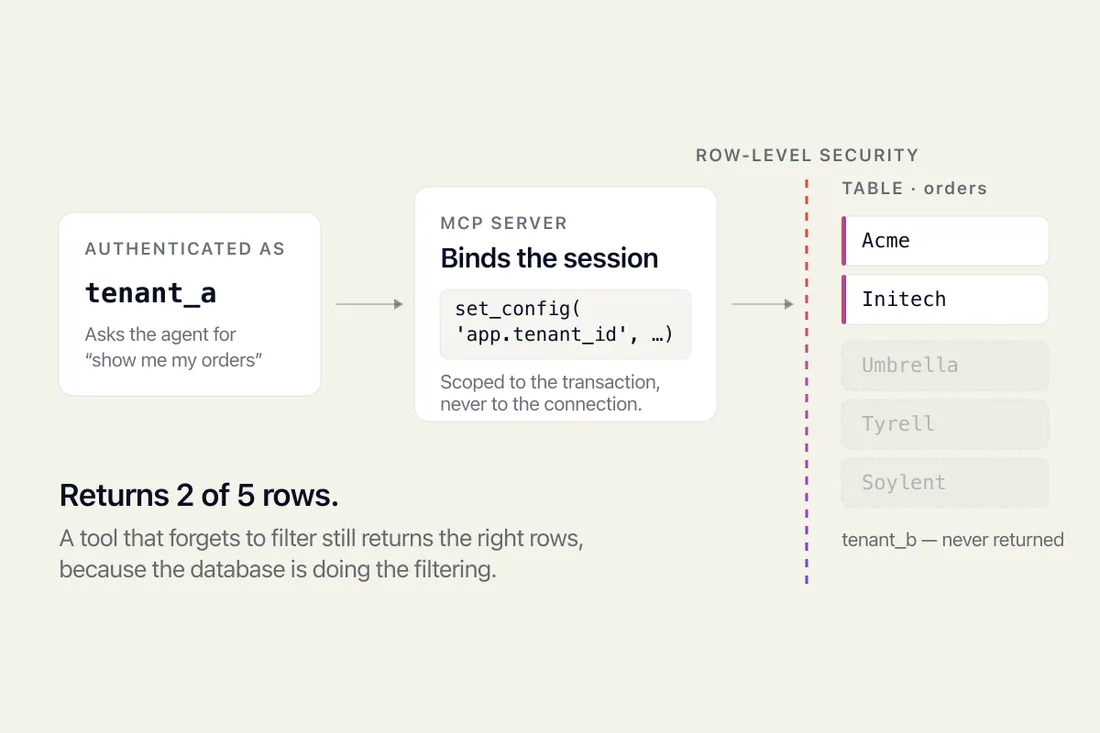
Give an AI agent your database and it sees every tenant's rows. How Postgres row-level security fixes that, and the two traps that silently disable it.

 Co-founder, PixlerLabJun 19, 2026

Imagine living in a world where machines don’t just understand you but can predict your next move. Pretty wild, right? Well, that’s exactly the magic of AI-and it’s not some sci-fi fantasy anymore. It’s here. If you’ve been wondering how to start AI Development, you’ve landed in the perfect spot. Over here at PixlerLab, we’ve been around the block a few times, and we’re eager to spill the beans on how you can get started in AI development. We’ll talk about basics, steps, and everything in between.
AI development isn’t just a trend; it’s a transformative force shaking up industries like healthcare, finance, and logistics. Have you ever noticed how precise predictions and automation are becoming standard? That’s AI. These fields are using AI to enhance precision and speed, making skilled AI developers highly sought after. But it’s not just about landing a job. It’s about being right at the heart of innovation. Imagine being part of the team that designs algorithms for early cancer detection or fraud prevention systems. So, why not jump on this wave and carve a lucrative career path?
And AI development offers a unique intersection of creativity and logic. As developers, we don’t just write code; we solve complex puzzles. Last month, we embarked on optimizing a recommendation system at PixlerLab that significantly increased user engagement. The thrill of seeing tangible results from our AI models is unparalleled. It’s not just about coding; it’s about creating solutions that matter.
Look, before you jump into coding, you gotta understand what AI really is. AI is about machines taking on tasks that typically need human intelligence. But what’s the story with AI, machine learning, and deep learning?
Machine learning allows systems to learn from their experiences. Deep learning? It’s a souped-up version of machine learning, utilizing neural networks with several layers to handle tough jobs. And let’s not forget the role of data-think of it as the fuel of AI, enabling systems to learn and make predictions.
“The best way to predict the future is to invent it.” – Alan Kay. Embrace this, and you’ll understand why AI is shaping tomorrow.
Here’s what you need to grasp: Algorithms are the recipes that process data. Models are the result when these algorithms are trained on data. And datasets? They’re the piles of data the AI system learns from. Get a handle on these, and you’re ready to tackle more sophisticated AI tasks.
Consider this: you’re building a house. Algorithms are your blueprints. Models are the finished house, and datasets are the raw materials. Each element plays a crucial role in AI’s effectiveness. At PixlerLab, we emphasize understanding these fundamentals before diving deep into complex models. We learned this the hard way during a project that, despite sophisticated algorithms, faltered due to inadequate data understanding.
If you want to become a standout AI developer, you need a blend of skills. Let’s dissect them.
Start with online courses covering machine learning basics. Platforms like Coursera and edX are treasure troves for both newbies and seasoned pros. Once you’re cozy, dive into mini-projects to put your knowledge to the test. Hackathons and open-source contributions? Fantastic for sharpening your skills. Honestly, real-world application is where you’ll learn the most.
Consider joining AI communities or forums like Reddit’s r/MachineLearning or Stack Overflow. These platforms are invaluable for troubleshooting and learning new tips and tricks. At PixlerLab, we encourage our team to contribute to open-source projects. It not only hones skills but also offers deeper insights into collaborative coding, which is essential in large AI projects.
Getting your workspace right is essential for efficient AI work. Here’s how to set it up:
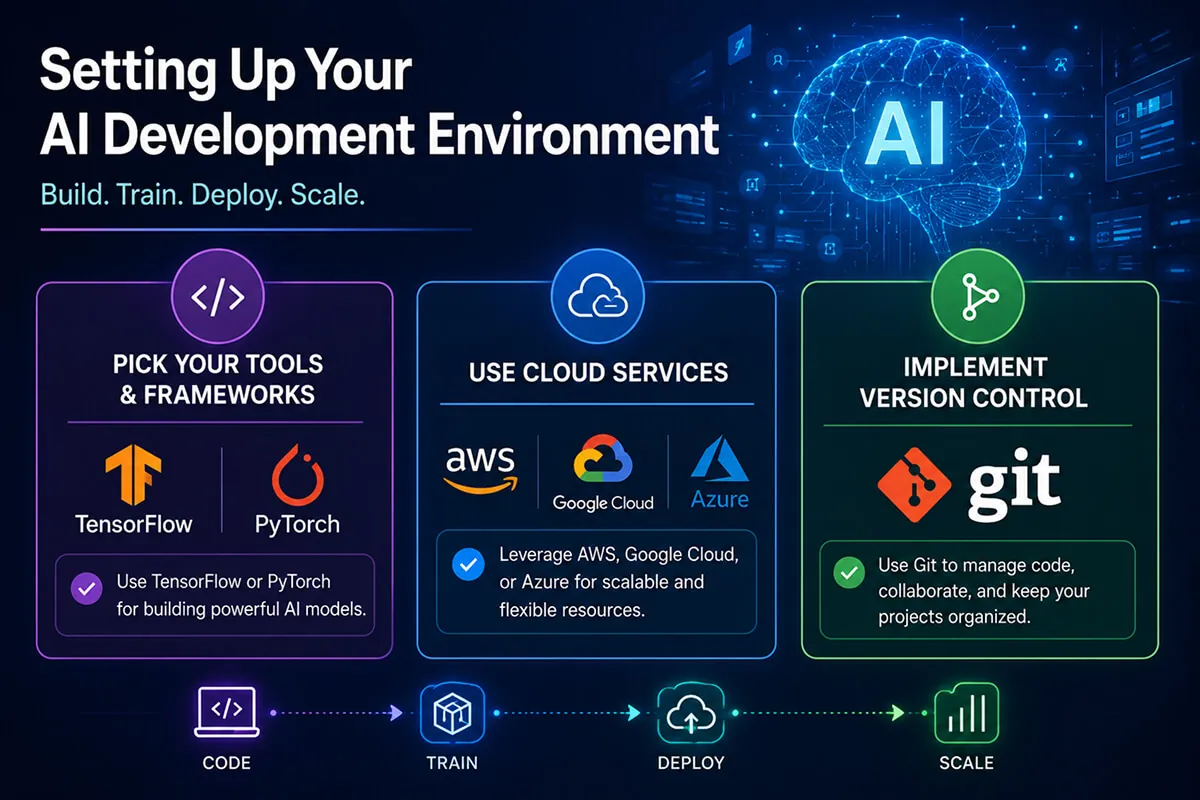
Set up a Python environment with Anaconda for easy package management. Jupyter Notebooks are stellar for interactive development-they let you document code and visualize your results on the fly.
# Sample setup for AI development environment
conda create --name myAIenv python=3.8
conda activate myAIenv
pip install tensorflow keras numpy pandas matplotlib
Also, consider Docker for creating containerized environments. It ensures that your development setup is consistent across different systems, which significantly reduces the “but it works on my machine” dilemma.
Ready to get your hands a little dirty? Let’s start a beginner-friendly AI project: sentiment analysis.
Start with a dataset like the IMDB movie reviews. Sentiment analysis is a superb entree because it involves data preprocessing and model evaluation. Choosing the right tech stack can easily make or break your AI project. So, let’s check out some options.
from keras.datasets import imdb
from keras.models import Sequential
from keras.layers import Dense, LSTM, Embedding
from keras.preprocessing import sequence

# Load and preprocess data
(X_train, y_train), (X_test, y_test) = imdb.load_data(num_words=5000)
X_train = sequence.pad_sequences(X_train, maxlen=500)
X_test = sequence.pad_sequences(X_test, maxlen=500)

# Model design
model = Sequential()
model.add(Embedding(5000, 32, input_length=500))
model.add(LSTM(100))
model.add(Dense(1, activation='sigmoid'))

# Compile and train
model.compile(loss='binary_crossentropy', optimizer='adam', metrics=['accuracy'])
model.fit(X_train, y_train, validation_data=(X_test, y_test), epochs=3, batch_size=64)
Remember, the first iteration of your model might not be perfect. Consider it a starting point. Use model performance metrics to identify areas for improvement. Experimenting with different neural network architectures and hyperparameters can lead to surprising improvements. TensorFlow and PyTorch are top picks for deep learning. TensorFlow is ideal for production environments, while PyTorch is favored for research. Your choice depends on your project’s unique needs and your team’s skills. For data tasks, don’t overlook Pandas, and scikit-learn is perfect for traditional machine learning.
Here’s the thing-scalability and performance are key. Opt for tools that mesh well with cloud services for smooth deployment. Cloud platforms offer machine learning-specific services to ramp up development speed. Integration of these services with AI frameworks is smooth, allowing you to focus on designing algorithms rather than infrastructure headaches. At PixlerLab, our experience with both TensorFlow and PyTorch shows that while TensorFlow provides superior options for deployment, PyTorch makes prototyping models a breeze, thanks to its dynamic computation graph. Whichever you choose, ensure it aligns well with your project’s demands.
Performance is important in AI development. Here’s how to keep your models humming smoothly.
Simplify your models to boost performance without losing accuracy. Techniques like pruning and quantization can help. Use tools like TensorBoard to visualize performance and pinpoint bottlenecks. It’s about balancing speed with accuracy.
Keep an eye on metrics like latency and throughput. These often go unnoticed but are vital for scalability. Tools like NVIDIA’s TensorRT can optimize inference performance, especially when resources are tight. At PixlerLab, we often find that simplifying the model architecture leads to faster and more resource-efficient solutions, especially for mobile deployment.
Data preprocessing optimization is another avenue to explore. Streamlining data input can lead to significant performance gains. Batch normalization and effective use of GPUs also contribute heavily to performance improvements.
Data quality? Crucial. Even the sleekest algorithms can’t salvage bad data. Also, remember AI isn’t a magic wand. It needs ongoing TLC. We’ve seen developers dive headfirst into complex projects without mastering the essentials, which often leads to headaches. Start small and grow. Documentation is vital for team collaboration and future maintenance.
Another common pitfall we’ve noticed is neglecting to align AI projects with business goals. Every model should serve a purpose that aligns with broader objectives. Failing to iterate based on feedback is another trap. Models should evolve based on real-world results and changing variables.
For more savvy tips, our AI modernization guides are worth checking out. They offer insights into avoiding these pitfalls and ensuring your AI journey is smooth and successful.
AI is beyond a mere buzzword; it’s genuinely making waves. Let’s peek at some examples:
Companies like Netflix and Amazon are using AI to enhance user experiences. These examples illustrate AI’s versatility and transformative power. AI is also playing a noteworthy role in smart cities, optimizing traffic flow and energy consumption. For more, see how AI development life cycles are changing how software is created.

Begin by learning Python, understanding machine learning fundamentals, and practicing with minor projects. Build data science chops and familiarize yourself with AI frameworks like TensorFlow or PyTorch. Online courses from Coursera and edX are perfect launch pads. Embrace Python with libraries like Pandas and NumPy. Kaggle offers datasets and community support for hands-on practice. Our AI agent development guide is also worth a peek.
Start with essential tools like Jupyter Notebooks for experimenting and Python libraries such as TensorFlow, Keras, and scikit-learn. Cloud platforms like AWS and Google Cloud provide flexible resources. For learning, platforms like Coursera and edX, along with tutorials on YouTube, are invaluable. Engaging with communities on forums like Reddit and Stack Overflow can also provide practical insights and support. Absolutely, AI development is booming across industries, offering numerous opportunities for innovation and career growth. The demand for AI skills is increasing as more companies seek to integrate AI solutions into their operations. Beyond job prospects, AI development offers a dynamic, evolving field where you can be at the forefront of technological innovation.
Your choice hinges on project needs and expertise. TensorFlow is stellar for large-scale operations, while PyTorch offers flexibility for research. Consider ease of use, community support, and scalability. Challenges include managing large datasets, turbocharging performance, and ensuring data quality. Staying current with research and tools is key to overcoming these hurdles. Expect challenges like handling large datasets, ensuring data quality, and optimizing performance. Data privacy and ethical concerns also play a significant role. AI development can require significant computational resources, which may pose challenges in terms of costs and scalability. Constantly evolving technology means staying updated is crucial to overcoming these challenges.
Embarking on AI development is a thrilling journey. We’ve covered the skills, tools, and processes you’ll need. Keep learning and experimenting-it’s the best way to grow in this dynamic field. Start with small projects, build confidence, and gradually tackle more complex challenges.
Dive into advanced AI topics and stay updated with industry trends. Join communities and forums to share knowledge and ask questions. If you’re ready to level up, consider partnering with experts for mentorship and guidance. Ready to accelerate your AI development journey? PixlerLab is here to help. Our team of experts offers comprehensive services to guide you through AI development complexities. From setup to deployment, we’re committed to your project’s success. Let’s collaborate and bring your AI ideas to life. Contact us today!
Join us at PixlerLab, where our team of experts is ready to assist you in navigating the AI development landscape. From beginners to seasoned developers, we offer tailored solutions to match your needs. Whether it’s consultation, development, or deployment, we’re here to make your AI dreams a reality. Reach out and let’s start building the future together.
Give an AI agent your database and it sees every tenant's rows. How Postgres row-level security fixes that, and the two traps that silently disable it.

MCP is a protocol for connecting AI to your tools. MVP is the smallest product worth shipping. What each means and which you need.

Model Context Protocol : what it replaces, how it speeds AI MVPs, & production-ready integrations today.